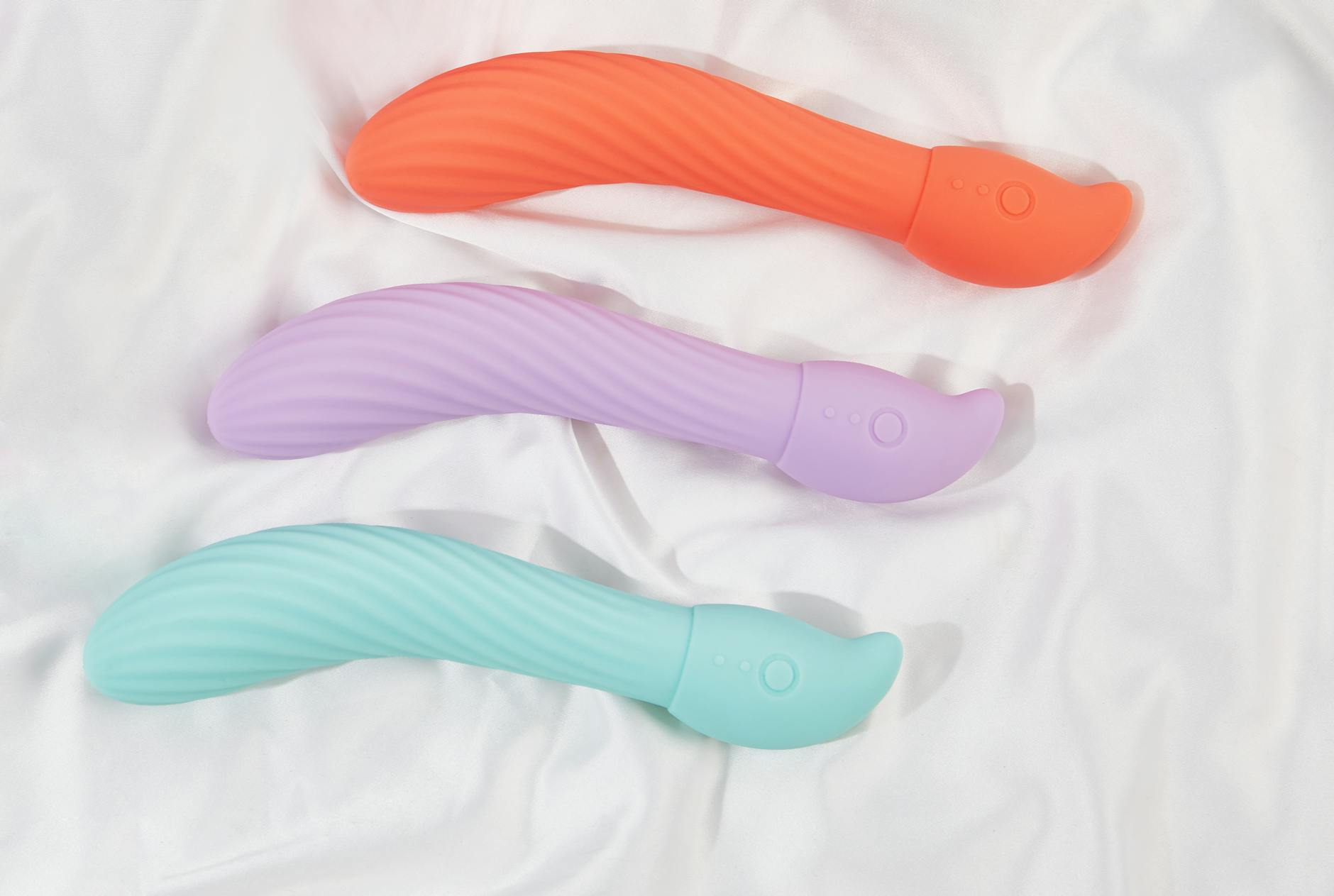
Let's talk about what actually changes
Menopause reshapes how your body responds to touch. The tissue around your clitoris thins slightly, lubrication changes, and arousal builds on a different timeline. This isn't a failure. It's a shift. And if you know how to work with it instead of against it, a lemon vibrator can feel better than ever.
Here's what I've learned from working with hundreds of couples navigating this transition: the women who struggle most are those trying to use their clitoral vibrators exactly the way they did at 35. The women who thrive are those who adjust their technique to match their new physiology. That's what this guide is about.
Why lemon vibrators work so well post-menopause
A lemon vibrator uses suction and gentle pulsing instead of direct vibration alone. This matters enormously after menopause. Direct vibration on thinner, more sensitive tissue can feel almost too intense or even create a numb, tapping sensation rather than pleasure. Suction, by contrast, stimulates the nerve endings around the clitoris without the harshness of traditional vibration.
The lemon clitoral vibrator design means you're creating a gentle seal that draws the tissue upward slightly, engaging a wider area of nerve clusters. You get broader, more diffused stimulation rather than a pinpoint buzz. For post-menopausal bodies, that's often more satisfying and requires less adjustment over time.
The best part: because the technology is gentler, you can use it more frequently without irritation, which many people find liberating after years of managing sensitivity.
The warm-up phase that changes everything
Under 40, many bodies can go from zero to arousal in five minutes with the right stimulus. After menopause, budget 15 to 25 minutes. This isn't slowness. It's how your nervous system works now.
Start with manual touch. Use your fingers or your partner's touch on the outer labia, inner thighs, and around the clitoris. This phase should feel good but not intense. You're building blood flow and signaling to your body that this is happening. Skin-to-skin contact also triggers oxytocin, which amplifies pleasure and makes lubrication easier.
During this phase, apply a water-based lubricant generously. Don't wait for natural lubrication to appear. Water-based lube is your foundation now. It reduces friction on sensitive tissue and makes every sensation cleaner and more pleasurable. This is not a compromise. It's a tool that changes the experience entirely.
After 10 to 15 minutes of manual touch and warmup, you're ready for the lemon vibrator.
Starting with the lemon vibrator: settings and placement
If you're using a Hello Nancy lemon vibrator for the first time after menopause, start at the lowest setting. Not because you're fragile, but because low intensity is often more effective on sensitive tissue. Your nervous system will respond to subtle signals better than it would have before.
Place the lemon vibrator over the clitoral hood or just to the side of the clitoris, not directly on the tip. This indirect approach prevents over-stimulation and feels more nuanced. The hood acts as a buffer, and you'll still feel full sensation through the tissue.
Turn on the lowest pattern and let it rest there for 10 to 15 seconds. You're not moving it yet. Just letting your body adjust to the sensation. Your clitoris will swell slightly with increased blood flow, and the tissue becomes more receptive.
After that adjustment period, you can slowly increase intensity or switch patterns. Many people find that the gentle suction patterns work better than pure vibration modes post-menopause. Experiment.
The technique that works best
Slow, deliberate movement beats rapid stroking post-menopause. Try small, slow circles around the clitoris using the lemon vibrator rather than up-and-down motions. Circles distribute sensation and prevent the device from creating pressure on one nerve pathway.
Alternatively, try the pulse-and-pause method: use the device for 20 to 30 seconds, then lift it away completely for 15 seconds. This pattern prevents desensitization. After menopause, sustained stimulation sometimes feels like numbness rather than building pleasure. Pulsing keeps sensation fresh.
If you're using the lemon vibrator with a partner, communication is everything. Have them start on your outer labia with the device while you give real-time feedback about pressure, speed, and placement. What felt incredible at 40 might need adjustment now, and that's information, not criticism.
Managing sensitivity and comfort
If the sensation feels too intense even on the lowest setting, you have options. Some people create a fabric barrier between the device and skin. A thin cotton or silk layer softens intensity while still transmitting sensation. Others prefer to use the lemon vibrator over underwear at first, then remove the barrier as comfort increases.
If irritation or redness appears after use, you're pushing intensity too far. Scale back. Pain is never the goal. Pleasure should build gradually. If you experience discomfort that doesn't resolve with technique adjustments, see your GP. Genitourinary syndrome of menopause (GSM) is treatable, and a menopause specialist can recommend topical estrogen creams that change tissue response within weeks.
Troubleshooting common post-menopause issues
"It feels numb or tapping, not pleasurable." You're likely using too much intensity. Drop to pattern one and focus on the slow circle technique. Numbness means your nervous system is overwhelmed. Back off.
"It takes forever to feel anything." That's normal. Extend your warm-up phase and increase lubrication. Add manual touch alongside the device. Your clitoris will respond. It just needs more time now.
"My partner thinks something's wrong." Nothing is wrong. Your body changed, and that means your pleasure practice changes too. Frame this as exploration, not compromise. The couples who navigate menopause best are those who treat it as an opportunity to deepen intimacy, not as something to endure.
Frequency and long-term use
Many post-menopausal people find they can use a lemon vibrator several times a week without discomfort, which is different from before menopause. This is because suction-based devices are gentler than traditional vibrators. Use frequency as a tool for learning your body. More exploration means more data about what works.
Over time, your nervous system recalibrates. What felt overwhelming at first becomes comfortable. Some people gradually increase intensity over months. Others find their sweet spot at low to medium settings and stay there. Both are fine.
Why this matters beyond the device
Menopause is when many people rediscover pleasure as something for themselves, not something they're performing for a partner. Using a lemon vibrator in a way that matches your post-menopausal body is a form of self-knowledge. You're learning how to listen to your own nervous system and honor what it needs.
That translates everywhere. If you can adjust your technique and stay curious instead of frustrated, you're practicing a skill that helps relationships survive menopause and thrive beyond it. Your pleasure matters. Your body's new signals are not a loss. They're information.
People also ask
How long does it take to adjust to using a lemon vibrator after menopause?
Most people adjust within two to four weeks of regular exploration. Your nervous system needs time to learn new sensation pathways. The first few uses might feel awkward or underwhelming. By week three or four, you'll have a much clearer sense of what works. Don't rush this. Patience is the actual technique.
Can I use a lemon vibrator if I have genitourinary syndrome of menopause?
Yes, but talk to your GP first. If GSM is causing pain during any stimulation, a topical estrogen cream or vaginal moisturizer often solves the problem within weeks. Once tissue health improves, devices like a lemon clitoral vibrator feel entirely different. It's worth treating the underlying issue before assuming pleasure is off the table.
Should I use more lube with a lemon vibrator after menopause?
Almost always yes. Water-based lubricant reduces friction and makes suction-based devices feel smoother. Apply generously during warm-up and reapply if sensation starts to feel sticky or dry. Lube is not optional post-menopause. It's foundational.
Is it normal that orgasms feel different after menopause?
Completely normal. They might feel more localized, take longer to build, or feel slightly less intense. Some people report deeper, more satisfying orgasms. The variation comes from hormonal shifts and blood flow changes. None of these variations mean you're broken. You're just experiencing pleasure differently.
Can I use a lemon vibrator alone, or do I need a partner?
You can absolutely use a lemon vibrator solo. Self-exploration is one of the best ways to learn exactly what works for your post-menopausal body. Many people find solo sessions more effective for learning because there's zero performance pressure. Once you know your own rhythm, partnered exploration becomes easier.
How often should I use my lemon vibrator after menopause?
There's no set schedule. Some people use it two or three times a week. Others use it daily. Frequency doesn't damage anything. What matters is comfort and pleasure. If you're experiencing irritation, scale back. If you're not, use it as often as feels good. Regular use can actually improve tissue health over time by increasing blood flow.
The bigger picture
Menopause changes how your body works. Using a lemon vibrator after menopause means adjusting technique, extending warm-up time, using more lubrication, and starting low on intensity. These aren't workarounds. They're the actual way pleasure works now.
The couples and individuals who thrive post-menopause are those who treat this transition as information, not a loss. Your body is still capable of intense, satisfying pleasure. It just needs a different approach. A lemon clitoral vibrator, used with the right technique, can be part of that rediscovery.
If you want to explore further or have questions about navigating menopause and intimacy in your relationship, reach out. That's what I'm here for.
References
Genitourinary Syndrome of Menopause: Diagnosis and Management. The North American Menopause Society, 2013.
Camden, A., et al. (2020). "Physiological Changes in Sexual Response During Menopause." Journal of Women's Health, 29(4), 502-509.
National Institute on Aging. (2023). "Sexuality in Later Life." U.S. Department of Health and Human Services.
Gardner, L., and Shaw, R. W. (2020). "Menopause and Sexual Function: A Comprehensive Review." Climacteric, 23(1), 44-53.