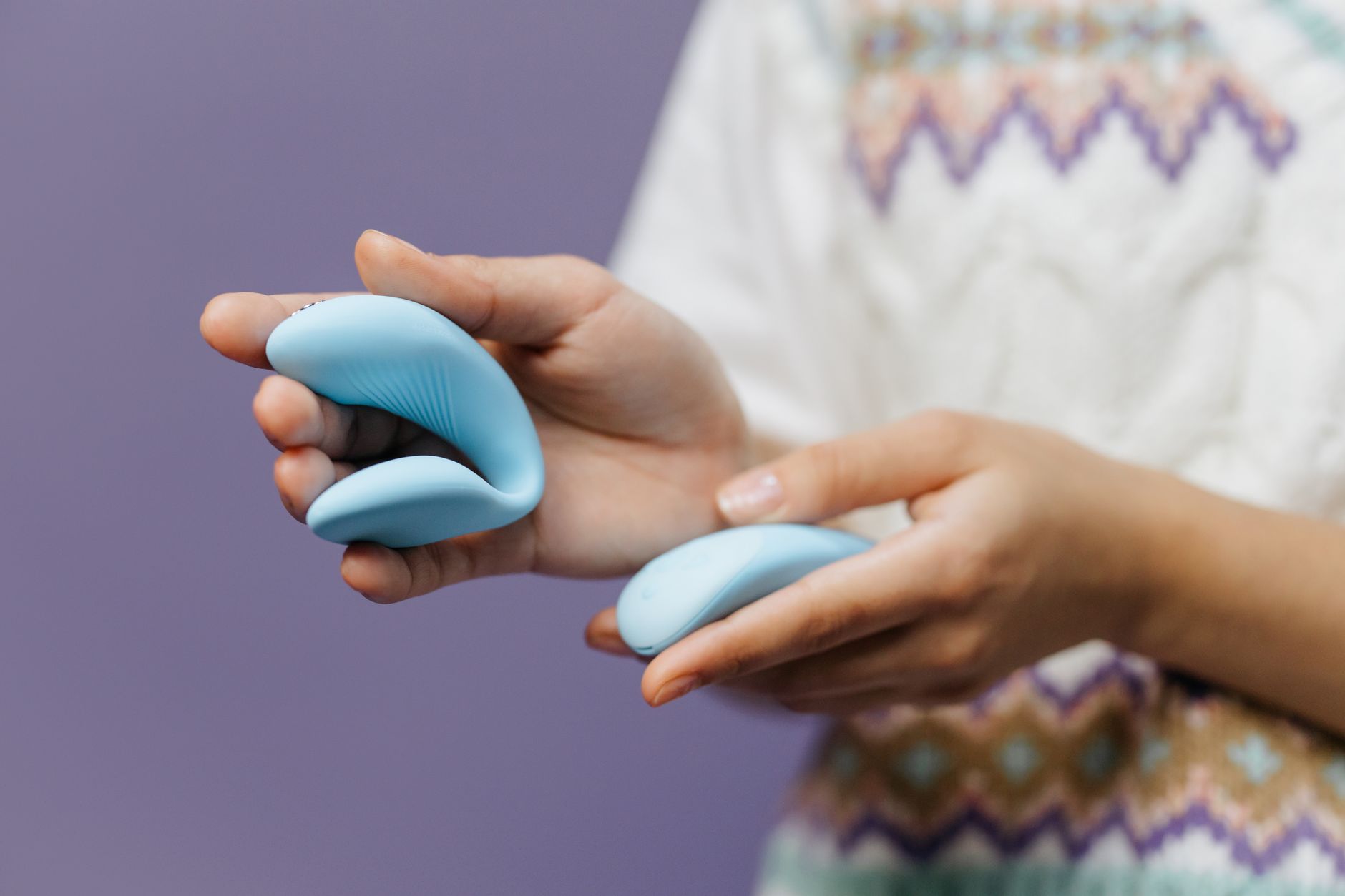
Here's the thing about skeptical partners
Your partner isn't being difficult. They're being protective. When someone says "I don't think we need toys," what they're really saying is one of three things: "I'm worried I'm not enough"; "I don't understand why you'd want this"; or "I'm not sure what my role is if we use one."
None of these are character flaws. They're just gaps in information. And once you understand the difference between replacement and enhancement, the entire conversation shifts.
Why skepticism happens (and why it's actually predictable)
Research on couples and sex toy adoption shows a pattern. Partners often worry that introducing a lemon clitoral vibrator means you're not satisfied with them. The irony? The opposite is usually true. People typically introduce toys into relationships where they feel safe and connected enough to ask for what they want.
But here's the data twist. Studies on couples who use vibrators together report higher sexual satisfaction and greater emotional intimacy than couples who don't. Not because the toy is magic. Because the conversation required to introduce it opens a door that's usually stayed shut. Suddenly you're talking about pleasure. Your pleasure. What you want. What you'd like to explore.
That vulnerability is the actual gift, not the vibrator.
The frame that changes everything
Don't say: "I want to use a toy."
Say: "I want us to explore something together. I've been curious about how this could feel, and I want you there with me."
The first is object-focused. The second is connection-focused. And your skeptical partner responds to connection, not novelty.
When you position a lemon vibrator as a tool you're inviting them into (not replacing them with), the dynamic flips. Suddenly they're not the person being replaced. They're the person you're bringing into a new kind of intimacy.
Three specific conversation starters that actually work
Timing matters. Don't bring this up during sex or right after rejection. Bring it up over coffee, during a walk, somewhere neutral.
Opener 1: The curiosity angle. "I've been thinking about something. I'm curious about the difference between what you do with your hands and what a tool designed specifically for the clitoris might feel like. Would you be willing to explore that with me? It's not about anything being missing right now. It's about being curious together."
Opener 2: The pleasure-for-you angle. "I want to be honest about something. Sometimes during sex I find myself wishing I could focus more on just the sensation instead of thinking about where we're at in the process. A lemon clitoral vibrator might let me do that. But I only want to try it if you're genuinely open to it."
Opener 3: The science angle (for data-driven partners). "I read that couples who explore new things together report feeling closer afterward. Not because of the thing itself. But because of the conversation and the willingness to try something together. I'm interested in that, with you."
Pick the one that matches your relationship's language. And then listen. Your partner might say no. That's information too.
What to do if they say no (the first time)
Don't push. Instead, ask: "What's making you hesitant? Is it that you're worried it means something about our sex life, or something else?"
Often, once the actual fear surfaces, it's addressable. "I worry I won't know what to do" is different from "I think you're not attracted to me anymore." And each one gets a different answer.
If they're worried about their role, show them what using a lemon vibrator together actually looks like. They hold it. You guide it. Or you hold it and they watch your face. The toy isn't replacing them. It's adding a layer. They're still the one creating the experience.
If they're worried about what it means about your attraction, that's a conversation about desire being complicated and multifaceted. You can want them and also want something different sometimes. Both are true.
When they say yes (and the nervousness that comes next)
Your partner has agreed to try. Good. Now don't hand them a lemon vibrator and expect them to know what to do.
Start with an explanation. "The suction on a clitoral vibrator is different from anything hands can do. It's not better. It's just different. My body responds to it differently. I want to show you what it feels like for me."
Then, the first time you use it together, prioritize his comfort as much as yours. Let him hold it. Let him control the setting. Let him watch your face and see what you feel like when you're really engaged in pleasure.
Many skeptical partners become enthusiastic converts once they see it in action. Not because the toy is impressive. But because watching your partner experience genuine pleasure is genuinely hot. That's neurochemistry, not insecurity.
The role a lemon vibrator actually plays
A lemon sucker or clitoral vibrator doesn't replace connection. It creates a different flavor of sensation that your body can respond to uniquely. It's the same reason you might want a massage after a long day, or music while you cook, or a specific type of touch during sex.
Your partner isn't competing with the vibrator. They're collaborating with it. You're in the scene together. The toy is just one element of what's happening between you.
If your partner is still skeptical after an honest conversation, that might point to something deeper about sexual communication in your relationship. And that's worth exploring with a therapist or relationship coach who specializes in intimacy. Sometimes the toy is the easy part. The hard part is feeling safe enough to ask for what you want.
How to use it when they're in the room but uncomfortable
If your partner has agreed to this but still seems tense, go slow. Start with the lowest setting. Use it for five minutes. Check in. "How are you feeling about this?"
Asking for feedback isn't about reassuring them constantly. It's about genuine collaboration. And sometimes partners realize, once they're actually in the moment with it, that their anxiety was worse than the reality.
The longer game
Introducing a lemon clitoral vibrator into a relationship where there's resistance isn't just about pleasure. It's about building a culture where you can ask for what you want without shame. Where pleasure matters. Where curiosity is safe.
That's the part that actually deepens connection. Not the toy itself. The willingness to be vulnerable about wanting something different, and the willingness of your partner to show up for that.
If you want to explore this together, I'd suggest starting with the conversation before you ever introduce the tool. Make sure you understand what your partner is actually afraid of. Then you can address the real thing, not the thing you're guessing about.
People also ask
Will using a lemon vibrator make my partner feel inadequate?
Not if you frame it right. The research is clear: couples who introduce toys report greater satisfaction and intimacy, not less. Your partner's insecurity comes from a gap in communication, not from the toy itself. Once they understand that a vibrator adds to your experience rather than replaces their contribution, most partners feel relieved. You can also explicitly tell them what you love about what they do, separate from the vibrator. "I love how you touch me emotionally, and I'm curious about a different kind of physical sensation." That's not competitive. That's honest.
How do I get my partner to actually try it instead of just tolerating it?
Stop asking them to tolerate it. Instead, invite them to participate actively. Let them control the settings. Let them watch your response. Let them understand that their involvement is essential to the experience. Many partners move from skepticism to enthusiasm once they realize they still have a role. The shift from passive acceptance to active participation changes everything.
What if my partner says no and really means no?
Then you have a choice. You can respect that boundary and drop it. Or you can revisit it in six months after more conversation happens. Sometimes people need time for ideas to settle. But if they're genuinely opposed and you really want to explore toys, that's a compatibility conversation worth having honestly. You might need professional support to navigate that.
Can I use a lemon vibrator solo if my partner doesn't want to be involved?
Absolutely. Your pleasure matters whether or not your partner participates. If you want to use a lemon clitoral vibrator during solo time, that's entirely reasonable. The boundary-setting conversation is different though. "I'm going to explore this on my own" feels different to a partner than "I want us to explore this together." Both are valid choices. You just need to know which one you're making.
Does using a toy during partnered sex mean I'm not attracted to my partner?
No. Multiple desires can exist at once. You can be wildly attracted to your partner and also want a different sensation sometimes. That's not a character flaw. That's human sexuality being complex. Many people want penetration sometimes and clitoral stimulation other times. A toy gives you options. It doesn't replace the attraction you feel.
How do I bring this up without making it sound like a criticism?
Don't lead with the problem. Lead with the curiosity. "I've been curious about trying this" is different from "I'm not satisfied." The first is exploratory. The second sounds like a complaint. Frame it as something you want to experience, not something you're not getting. Your partner is much more likely to be open if they understand you're expanding your pleasure, not criticizing theirs.
The bottom line
Skeptical partners aren't broken. They just need information and reassurance. Once you translate "I want to use a lemon vibrator" into "I want to explore pleasure with you in a new way, and I want you involved," the conversation becomes about intimacy, not about toys.
Start there. Everything else follows.
Further reading
For couples working through intimacy challenges more broadly, our guide on how to use a lemon vibrator to build deeper connection with your partner explores the emotional dimensions in more depth. And if communication about sex itself feels stuck, we've got specific strategies for when communication feels stuck with your partner.