
Let's start with what you're actually worried about
Most people who think about bringing a lemon vibrator into their relationship aren't anxious about the mechanics. They're anxious about the conversation. Will your partner feel replaced? Inadequate? Will it kill the spontaneity? Will it make things weird?
Honestly, the opposite usually happens. But only if you approach it as adding something, not fixing something.
The conversation matters more than the toy
Here's the thing. A clitoral vibrator in bed is just equipment. What your partner hears when you mention it depends entirely on how you frame it.
Bad framing: "I want to come faster." (Subtext: what you're doing isn't working.)
Good framing: "I want to explore something new together." (Subtext: I'm excited to share this with you.)
The timing is crucial too. Don't spring it in the moment. Don't lead with it as a solution to a problem you've never discussed. Bring it up outside the bedroom, when you're both calm and clothed, the same way you'd mention wanting to try a new restaurant.
You might say: "I've been curious about exploring different sensations together. There's a lemon vibrator I've been reading about, and I think it could be fun for both of us. What do you think?"
That sentence does three things. It centers the experience as shared ("together"). It positions curiosity, not complaint ("curious"). And it explicitly asks for their input rather than announcing a plan.
Why partners often say yes faster than expected
Most people in long-term relationships want two things from sex: connection and novelty. A lemon vibrator delivers both.
For the partner using it, a clitoral vibrator means more consistent pleasure. That's not a loss for your partner. That's a win. If you're more satisfied, the entire experience shifts. Your arousal builds differently. Your responses change. That's interesting to them.
For the partner not using it, watching someone they care about experience intense pleasure is genuinely hot. There's nothing in that transaction that feels like they're being replaced. They're part of creating that pleasure.
What sometimes trips couples up is overthinking it. If you treat the vibrator like it's a bomb you're carefully defusing, your partner will match that energy and get nervous too. If you treat it like a fun thing you both want to try, that energy is contagious.
The practical setup that actually works
First decision: introduction style. Some couples like to start with a toy during partnered penetration (it can add stimulation for both people). Some prefer solo exploration first, then bringing the partner in. Neither is wrong. Do what feels natural to you.
If you're using a lemon clitoral vibrator during partnered sex, here's what helps.
Positioning matters. If you're on top, you control the angle and pressure on the toy. If your partner is on top, you have both hands free to hold it exactly where you want it. If you're side-by-side, there's less performance pressure on either person. Experiment. What feels good one day might feel different another day.
Start low and build. The most common mistake is going straight to maximum intensity. Your body takes longer to warm up than the vibrator does. Begin with the toy off while you're kissing and touching, then turn it on at a low pattern. You can increase as arousal builds.
Communicate in real time. "A bit faster," "lighter touch," "more to the left." Your partner can't read your mind, and good partners want this feedback. It's not criticism. It's the difference between okay sex and incredible sex.
Don't make it the main event. The lemon vibrator shouldn't be the only thing happening. It's part of the experience, not the whole thing. Use it for 15 minutes, then set it aside. Touch each other. Change positions. Keep the conversation and connection alive.
Common worries, decoded
"What if my partner thinks I'm not attracted to them anymore?" The anxiety here is real, but the logic is backwards. You're adding pleasure, not subtracting their role. If you frame it as "I want you to be part of this," rather than "I'm doing this instead of you," the story changes. Your partner wants you to feel good. A lemon vibrator helps that happen.
"What if they want to use it solo now?" Great. Let them. Just because a toy exists doesn't mean it replaces partnered sex. Most couples who introduce a vibrator find it becomes a sometimes thing, not an always thing. And sometimes is plenty.
"What if they think it's weird?" Some people do have initial resistance. That's usually because they've internalized the old narrative that good sex should be spontaneous and unaided. One way to reframe this: we use tools for everything else we care about. A vibrator is just a tool that makes pleasure accessible and consistent. That's not weird. That's efficient.
The emotional truth underneath
Introducing a lemon vibrator into your relationship isn't really about the toy. It's about expanding what you're willing to explore together. It's about saying: I trust you. I want you to know me more completely. I want us to be curious together.
That's the thing that actually strengthens couples. Not the toy itself. The willingness to be vulnerable about desire and to create space for each other's pleasure.
If your partner responds with openness, you've learned something important about them. If they respond with resistance, you've learned something important too. Either way, the conversation itself is the point. You're saying: this part of me matters, and I want you in it.
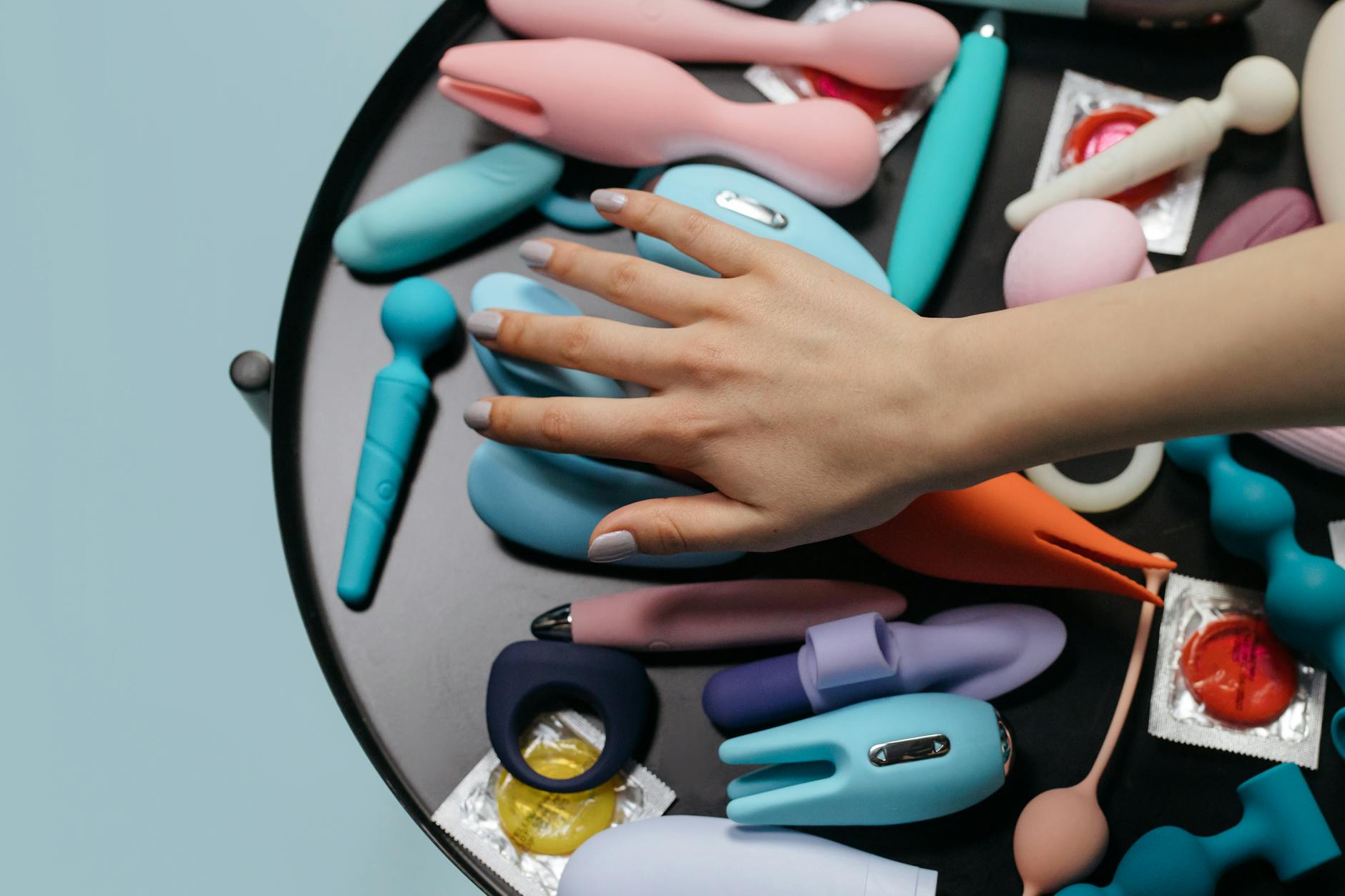
Photo by cottonbro studio on Pexels
After the first time
Honestly, the best part often comes after. Once you've used a toy together, the pressure lifts. It's no longer a big thing. It's just something you do sometimes, or don't, depending on what you're in the mood for.
Some couples find they use a lemon vibrator frequently. Some use it once and never again. Some rotate it in seasonally. There's no right answer. The point is that you've expanded your toolkit and your trust.
If it doesn't feel good the first time, that's normal too. Pleasure takes time to build, especially when you're introducing something new. Give it a few tries before deciding it's not for you.
FAQ
Can using a vibrator during sex make it harder for me to orgasm without one?
No. Your body doesn't develop a "dependence" on vibration. What sometimes happens is that your nervous system recognizes vibration as efficient, so you relax into it faster. That's not a problem. It's your body learning what works. You can absolutely orgasm without a vibrator. You're just now aware that you can also orgasm with one, and that's a choice you get to make.
What if my partner gets jealous of the toy?
Jealousy usually signals that the framing got lost somewhere. The toy isn't a replacement. If that message didn't land, it's worth circling back and saying it plainly: "I want you in this. I want us to explore together. The toy isn't about you being inadequate. It's about both of us having more options." Sometimes couples benefit from <a href="/contact">talking this through with a professional</a> if the resistance is strong.
Should I warn my partner before using it?
Yes. Build anticipation. "I want to try something tonight" gives them something to look forward to and time to get curious. Surprise can be fun, but respect usually wins over surprise in long-term relationships.
Is there a "best" lemon vibrator for couples?
The Lem vibrator is designed for external clitoral stimulation and works beautifully in partnered contexts because it's easy to position and the suction sensation is intuitive for most people. But the best toy is the one you're both excited to try. Check out <a href="/blog/guide">our buying guide</a> for options that fit your preferences.
How do I bring this up if we haven't talked about sex much?
Start smaller. "I'd like us to explore more together. Not anything complicated. Just trying new things." That opens the door without overwhelming them. From there, the vibrator conversation becomes much easier because you've already signaled that novelty and growth are okay.
What if they say no?
Then they say no. And you respect that. This isn't a pressure situation. What you're looking for is enthusiastic yes, not reluctant agreement. If they're not into it, pushing won't change their mind. It will just create tension. The real conversation is: "What would make you feel excited about expanding our sex life?" Sometimes it's not a vibrator. Sometimes it's a different position, a different time of day, more foreplay, or less performance pressure. Listen for that.
The bigger picture
Introducing any new element to partnered sex is really about trust and communication. The lemon vibrator is just the vehicle. What you're building is a relationship where desire is discussed openly and where pleasure is something you prioritize together.
That's what actually strengthens couples over time. Not the specific toy. Not the specific technique. The willingness to show up as your full self, vulnerabilities and desires and all, and have your partner do the same.
Start the conversation. See where it goes. And know that whatever happens, you're already doing the most important part: connecting with your partner about what matters to you.