
Let's talk about what trauma does to pleasure
Trauma changes your relationship with your body. It doesn't erase your capacity for pleasure, but it builds walls around it. Your nervous system learns to protect you by saying no to sensations that feel risky, even when they're actually safe. That hypervigilance makes it hard to relax enough to feel anything good.
Reclaiming pleasure after trauma takes patience, intention, and tools that create safety. A Lemon Vibrator can be one of those tools, but only if you approach it the right way.
Why clitoral suction toys feel different after trauma
Trauma survivors often find that traditional vibrators feel too direct, too intense, or triggering in ways that are hard to articulate. The firm pressure can feel invasive. The speed feels demanding. Suction-based stimulation like a Lemon Vibrator works differently because it uses gentle air pulse technology instead of friction or rapid vibration.
Here's what that means practically: suction stimulates nerves without the same aggressive mechanical pressure. You're not being touched in a pushy way. The sensation is more like a gentle draw, a pattern your body recognises as safe before it recognises it as pleasurable. That distinction matters wildly when your nervous system is in recovery mode.
Many clients describe clitoral suction as feeling less like an intrusion and more like an invitation. You control the intensity by selecting the pattern, not by controlling how hard someone or something is pressing into you. That agency alone can shift the entire experience.
Starting over: the first session framework
Your first solo experience with any toy after trauma should be planned, protected, and pressure-free.
1. Choose your environment carefully. You need a space where you feel physically and emotionally safe. That might mean locking the door, silencing your phone, or timing it when you know you won't be interrupted. Some people light a candle or play music. Some prefer silence. Your job is to remove distractions so your nervous system can settle.
2. Begin clothed. Yes, seriously. Spend the first few sessions just exploring the toy through fabric. Let your body get used to the sensation without the vulnerability of being undressed. This sounds like a small thing. It's not. It's your nervous system learning that pleasure doesn't require exposure.
3. Start with the lowest setting. Don't skip ahead. Pattern 1 or 2 on a Lemon Vibrator is designed to be a whisper, not a shout. Spend 5 to 10 minutes at the lowest level, noticing how your body responds. There's no goal here except awareness.
4. Stop whenever you want. This is non-negotiable. If something feels off, you stop. You don't push through. You don't try to be braver or more open. You honour what your body is telling you. That's how trust gets rebuilt.
The nervous system retraining work
Trauma lives in your nervous system as learned patterns of threat detection. Your body has been trained to see pleasure, particularly sexual pleasure, as unsafe. Rewiring that takes repetition, patience, and gentleness.
Each time you have a positive, low-pressure experience with your body, you're creating new neural pathways that compete with the old threat-based ones. You're teaching your nervous system that sensation can be pleasurable instead of dangerous. That's not therapy speak. That's neurobiology.
Start with short sessions: 10 to 15 minutes, once or twice a week. That frequency is enough to build new associations without overwhelming your system. Keep sessions short enough that you finish before frustration sets in. Quality over duration. A 12-minute session where you felt safe the whole time is infinitely more valuable than a 30-minute session where you spent 20 minutes feeling anxious.
Over weeks and months, you might notice your body relaxes more quickly. Your mind wanders less. Sensation starts to feel interesting instead of alarming. These are signs that your nervous system is recalibrating.
Working with a partner while you're healing
If you're in a relationship, communication is the whole ballgame. Your partner needs to understand that this is about your healing, not about their performance or attractiveness. Many partners take trauma responses personally when they're actually about physiology and safety.
Boundary-setting looks like: "I'm exploring solo pleasure right now. I'll let you know if I want to share this with you later." That's it. You don't need to justify it or explain your trauma history. You need your partner to respect that you're doing important work.
When you do feel ready to involve a partner, start small. Maybe they're just in the room while you use your Lemon Vibrator solo. Maybe they hold your hand. The scaffolding has to be gradual, and you have to control the pace entirely.
Many trauma survivors never want partnered sex to look the way it did before. That's not a failure. That's you setting boundaries that keep you safe. A good partner will celebrate your healing even if it means changing the shape of your intimacy.
Red flags and when to pause
If you notice panic, intense dissociation, or flashbacks during or after use, stop and reach out to your therapist. This doesn't mean something is wrong with you or with the toy. It means your nervous system needs professional support to move through this particular block. That's okay.
Disociation is different from relaxation. Relaxation is a softening. Dissociation is a checking-out, a floating away from your body. If you're spacing out, you're not healing. You're coping. There's a difference.
Similarly, if the experience triggers shame spirals afterward, that's a signal. Not a sign to push harder next time, but a sign to slow down and maybe involve a trauma-informed sex therapist.
When pleasure starts to return
One day you might notice that your body responds before your mind catches up. Your breathing changes. Your skin prickles. You want the sensation to continue. That's the moment healing becomes real. Not because you've suddenly fixed yourself, but because your body is remembering that it can trust sensation again.
From there, you might start experimenting with different patterns on your Lemon Vibrator. You might discover that pattern 4 feels good where pattern 2 felt neutral. You might find that combining the clitoral suction with gentle internal touch feels right. You're not following a script. You're learning your own body's language again.
That language is yours. It might look nothing like what you had before. It might surprise you. It might be simpler or stranger or more specific. All of that is fine. Healing isn't about getting back to normal. It's about creating a new normal that feels safer and more honest.
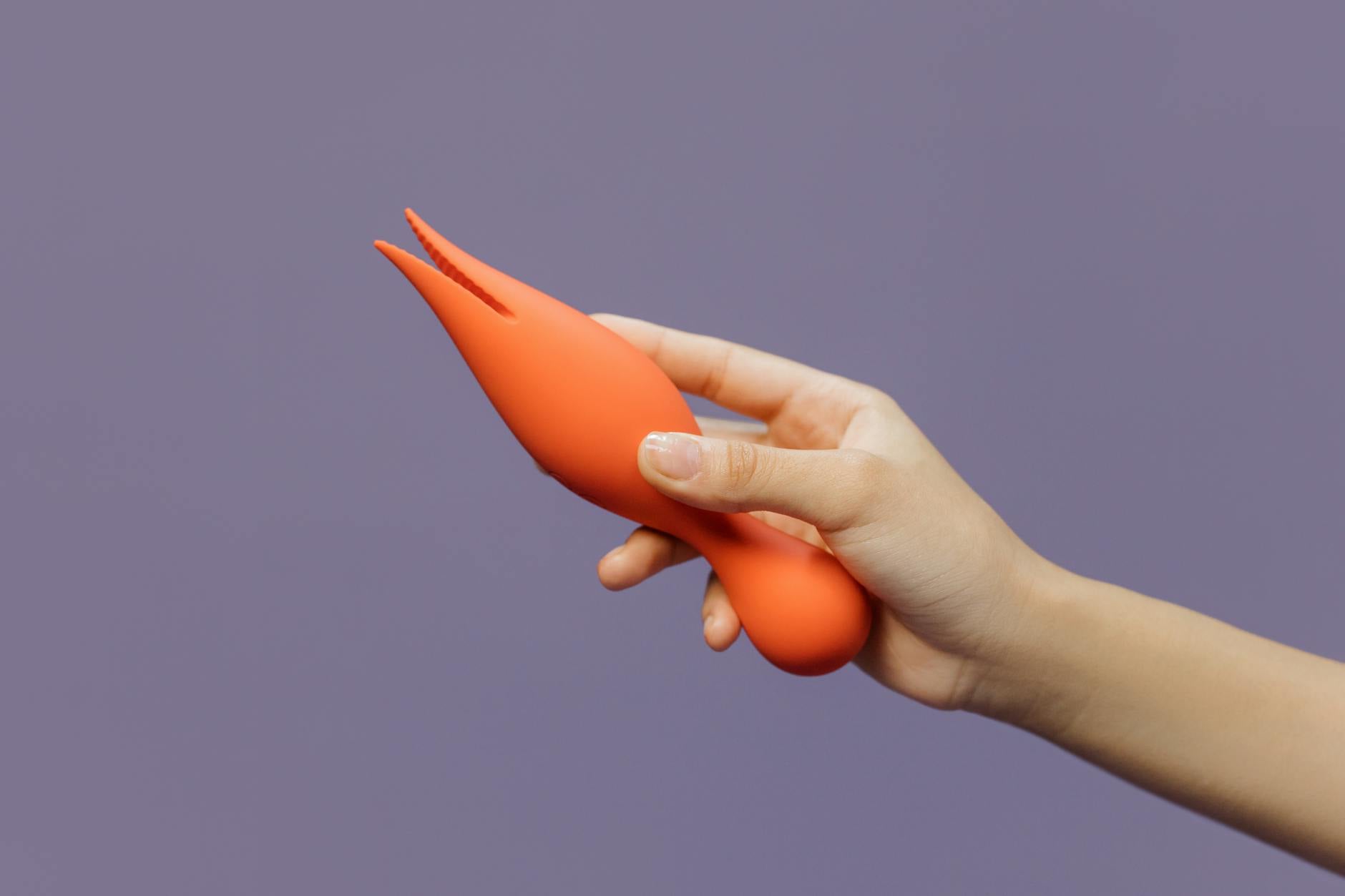
Photo by cottonbro studio on Pexels
The long game: pleasure as a practice
Healing is not a destination. It's a practice. Some weeks you'll feel connected to your body and pleasure will come easily. Other weeks, you'll feel disconnected and guarded. Both are normal. Trauma recovery isn't linear, and neither is reclaiming pleasure.
Keep your Lemon Vibrator accessible but not pressuring. Use it when you want to, not because you think you should. Some people find that pleasure becomes a form of self-care, a way of checking in with their body and honouring what feels good. Others use it occasionally as a reminder that healing is happening.
The clitoral suction design of a Lemon Vibrator makes it particularly suited to this journey because it doesn't demand intensity or speed. It invites. It suggests. It lets you lead entirely. That's what makes it a tool for trauma recovery, not just a toy for pleasure.
Your pleasure matters. Your safety matters more. Move at your pace, respect your body's signals, and know that reaching out to a therapist or counsellor is a sign of strength, not weakness.
People also ask
Can I use a clitoral vibrator if I have sexual trauma?
Yes, but approach it intentionally. Trauma-informed use means starting slowly, choosing safe environments, controlling every variable, and stopping immediately if something feels off. Many trauma survivors find that suction-based toys feel safer than traditional vibrators because they use gentle air pressure instead of direct mechanical stimulation. Consider working with a trauma-informed therapist alongside exploring any sexual tool.
How long does it take to feel pleasure again after trauma?
There's no universal timeline. Some people feel shifts in weeks. Others take months or years. Healing isn't about speed. It's about consistent, gentle exploration with zero pressure. Your nervous system will recalibrate at its own pace. Rushing the process often backfires. Patience with yourself is the real work.
What's the difference between dissociation and relaxation during solo pleasure?
Relaxation is a softening. Your body feels heavy, your breathing slows, your mind settles. Dissociation is a floating away, a numbing out, a sense of watching yourself from outside your body. Relaxation is healing. Dissociation is coping. If you notice yourself spacing out, pause and reconnect with your environment. This is a signal to slow down, not push forward.
Should I tell my partner I'm using a lemon vibrator for trauma recovery?
That depends on your relationship and your comfort level. Some people keep solo pleasure entirely private. Others find that transparency deepens trust. If you choose to share, frame it as personal healing work, not as feedback about your partner. "I'm exploring my own body's capacity for pleasure" is different from "I'm not satisfied with you." Boundaries around timing and privacy are completely valid.
Can a Lemon Vibrator replace therapy for trauma?
No. A Lemon Vibrator is a tool for reclaiming pleasure, not a substitute for professional trauma treatment. If you're dealing with complex trauma, PTSD, or severe anxiety around sexuality, work with a trauma-informed therapist alongside any self-care practices. The toy supports healing. Therapy does the deeper work.
What if I feel guilty or ashamed using a toy after trauma?
Shame is a common response when we've been taught that pleasure is dangerous or wrong. Notice the shame without judgment. Recognise it as a learned response, not truth. Many people find that shame diminishes over time with gentle, repeated experiences of pleasure in safe contexts. If shame is overwhelming, that's material for therapy. You deserve healing without the guilt.
Moving forward
Healing your relationship with pleasure after trauma is some of the most important work you can do. It says to yourself: I deserve to feel good. My body is worth caring for. I get to define what safety looks like for me.
A Lemon Vibrator, used thoughtfully, can be part of that reclamation. But the real tool is your commitment to moving slowly, honouring your boundaries, and trusting your body's signals. That's where the actual healing lives.
If you have questions about how to use any of Lemon Vibrator's clitoral toys safely or need guidance on your specific situation, reach out to our team at /contact. We're here to support your journey, whatever that looks like.