Let's start with the thing nobody tells you
Your body isn't broken because sensation feels overwhelming. Oversensitivity during pleasure is wildly more common than you'd think, and it's absolutely workable. The problem isn't your clitoris or your nervous system. The problem is usually that most vibrators are designed with one default setting: maximum intensity.
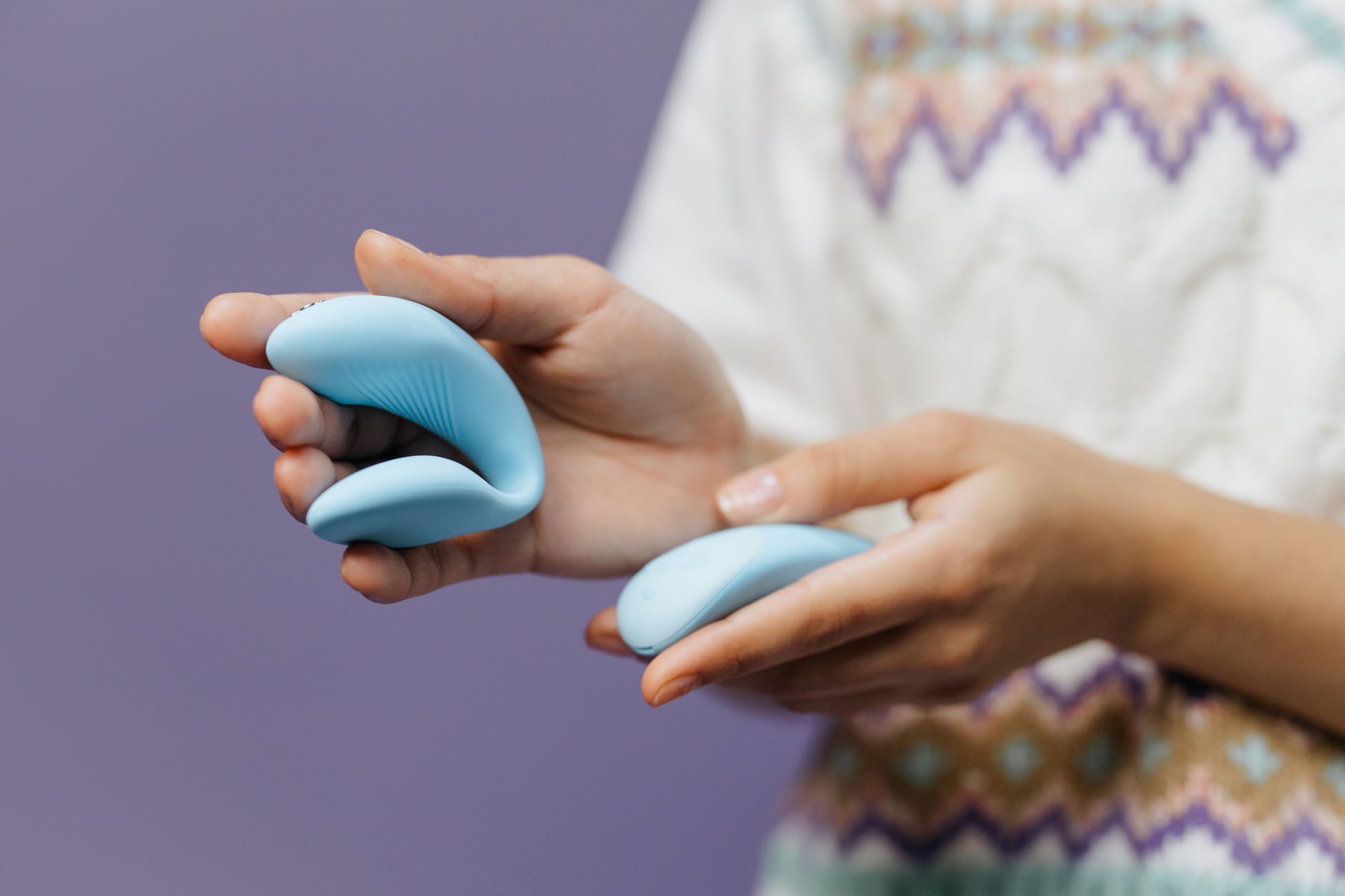
A lemon vibrator changes that equation because it works with suction rather than traditional vibration, which gives you much finer control over how much stimulation you actually experience.
Why everything suddenly feels too intense
There are a few reasons your body might be sending "dial it back" signals, and they're worth understanding because the fix is different depending on the source.
Hormonal shifts. During certain points in your cycle, your clitoris becomes more sensitive to touch. Progesterone peaks can make even light stimulation feel sharp. Post-ovulation, your tissues are also naturally more engorged, which amplifies sensation.
Recovery and healing. If you're coming back from pelvic floor dysfunction, endometriosis treatment, or even just a long period of not having sex, your nerve endings are literally relearning how to respond. That hypersensitivity is actually a sign of healing, but it needs respect.
Anxiety and tension. When you're in your head about pleasure, your pelvic floor tightens. A tight pelvic floor makes stimulation feel sharper and more overwhelming because there's nowhere for the sensation to disperse. Your body's literally clenching around the intensity.
Medication side effects. Some antidepressants, blood pressure meds, and hormonal contraceptives can change nerve sensitivity. Your clitoris might feel either completely numb or aggressively oversensitive depending on what you're taking.
The good news: none of these are permanent problems. They're all workable with the right approach.
Why a lemon vibrator is actually ideal for sensitive bodies
Here's the key difference between a lemon clitoral vibrator and traditional vibrators. Most vibrators rely on repetitive buzzing that stimulates through direct pressure and speed. You can't really control that finely. You're basically choosing between "on" and "off."
A lemon vibrator uses air-suction technology instead. It creates a gentle pulsing sensation that feels more like rhythmic waves of pressure rather than intense buzzing. That matters enormously when you're sensitive because suction naturally distributes sensation across a broader area instead of concentrating it sharply on one spot.
It's the difference between someone poking you repeatedly versus someone gently cupping their hand and creating rhythm. Same outcome (pleasure), completely different sensation pathway.
The practical setup for sensitive bodies
Before you even turn it on, get the environment right because that's half the battle.
Start with a clear head. Seriously, do this when you're not rushing, not stressed, not trying to prove anything. If you're already in a headspace of "hopefully this will work," your nervous system is already tense. Wait for a time when you can actually relax.
Use water-based lubricant. This isn't optional when you're sensitive. Lubrication creates a buffer between your skin and the device. It also signals to your nervous system that this is safe, which helps your pelvic floor release rather than clench. A good water-based lube (nothing with glycerin if you're prone to yeast infections) makes the sensation gentler and more diffused.
Warm up longer than you think you need to. Spend 15-20 minutes on foreplay before you even introduce the lemon vibrator. This isn't wasting time. You're literally engorging your tissues and preparing your nervous system. When you're already partially aroused, the same level of vibration feels less sharp.
Position matters. Lie on your back or recline slightly rather than sitting up. When you're horizontal, your pelvic floor naturally relaxes more. If you're upright and tense, you're fighting gravity and your own tension simultaneously.
Using the lemon vibrator on sensitive days
Start at the lowest setting. Most people with lemon vibrators default to pattern 3 or 4. If you're sensitive, begin at pattern 1. This isn't the "training wheels" version. It's often where the magic actually happens for sensitive bodies.
Hold it slightly away from your clitoris rather than directly on it. The suction technology works through proximity, not contact. Try positioning it about a half-inch to an inch away from your clitoris at first. You'll feel the gentle pull without the sharp intensity of direct contact.
If even that feels too much, try stimulating the areas around your vulva first. The inner labia, the perineum, even the area between your clitoris and vagina are often less sensitive entry points. You can work toward your clitoris once your nervous system has settled.
Move slowly between patterns. Give yourself a solid 30 seconds at each level before moving up. Your body needs time to acclimate to each new sensation.
What to do if it's still overwhelming
Oversensitivity sometimes needs a different strategy entirely, and that's totally fine.
Try it with a barrier. Sound weird? It works. Some people find that using a lemon vibrator through a thin cotton cloth (like a silk sleep mask or even a soft t-shirt) significantly softens the sensation while keeping the pleasure intact. The barrier dampens intensity without eliminating it.
Focus on rhythm over intensity. Keep your pattern steady rather than switching between speeds. Your nervous system calms down when it can predict what's coming. Erratic changes in intensity can spike that overwhelming feeling. Find a pattern that works and stay there for 5-10 minutes.
Breathe intentionally. This is where having a partner matters or it's worth practicing solo. Deep breathing signals safety to your nervous system. Shallow breathing and holding your breath signal stress, which makes everything feel more intense. Breath in through your nose, out through your mouth, slowly.
Take breaks without stopping. Pull away for 20-30 seconds, let your nervous system settle, then come back. You don't have to keep going until you orgasm. Pleasure is allowed to be intermittent and exploratory.
If oversensitivity is connected to past trauma or ongoing anxiety about pleasure itself, it's worth talking to a sex therapist or a pelvic floor physical therapist. That's not a failure. That's getting the right support.
When to check in with a provider
Oversensitivity that's new and unexplained deserves attention. If your clitoris suddenly feels painful rather than just intense, or if you're experiencing burning or sharp pain during arousal, check in with your gynaecologist or a pelvic floor specialist. That could signal a skin condition, infection, or nerve issue that needs actual medical attention.
Similarly, if oversensitivity is paired with complete numbness in other areas of your vulva, or if it's making penetration painful, those are signs that something deeper is happening with your nervous system. That's not something a lemon vibrator can fix alone.
But if it's just a matter of "normal sensation feels intense right now," you're working with something completely manageable.
The bigger picture
Oversensitivity is often your body asking for slower, more intentional pleasure. That's not a restriction. That's actually an invitation to explore sensation more deeply because you're forced to pay attention instead of going on autopilot.
Many people with sensitive bodies report that once they finally slow down and use something like a lemon clitoral vibrator with intention, they discover pleasure that's actually more satisfying than the fast, intense kind. You're training your nervous system to feel subtlety, which builds stronger pleasure pathways over time.
Your body isn't working against you. It just needs a different approach.
People also ask
Why does my clitoris feel oversensitive some days and numb other days?
Your clitoris is hormone-responsive and also deeply connected to your nervous system state. During high-progesterone phases of your cycle, your tissues are naturally more sensitive. Additionally, stress, anxiety, and being in a dysregulated nervous state can make your clitoris feel hypersensitive as a protective response. Your body literally tightens around intensity when it feels unsafe. This is why oversensitivity often improves when you actually relax, which sounds backwards but is biomechanically real.
Can I use a lemon vibrator if my clitoris is too sensitive?
Absolutely. In fact, many people with sensitive clitorises prefer the suction technology of a lemon vibrator over traditional vibrators because suction is naturally more diffuse. The key is starting at the lowest setting, positioning it slightly away from your clitoris rather than directly on it, and giving yourself permission to take breaks. Oversensitivity isn't a contraindication for pleasure. It's just a signal to adjust your approach.
Is oversensitivity a sign of nerve damage?
Not necessarily. Oversensitivity can absolutely be from healed or healing nerve damage, but it's much more commonly from hormone shifts, anxiety, pelvic floor tension, or just being in a nervous system state where your body is protecting itself. If oversensitivity is new, sudden, and paired with pain or burning, get it checked by a doctor. But garden-variety "sensation feels sharp and overwhelming" is usually about nervous system state, not damage.
How long does it take for oversensitivity to calm down?
That depends on what's causing it. Hormonal oversensitivity shifts with your cycle, usually improving in the follicular phase. Anxiety-related oversensitivity improves when you actually work with your nervous system (therapy, breathing, slowing down, building safety). Post-trauma or post-injury oversensitivity can take weeks to months of gentle, consistent use before your nervous system relearns that sensation is safe. The common thread is that all of these improve faster when you're intentional rather than pushing through it.
Can I orgasm if my clitoris feels too sensitive?
Yes, and sometimes oversensitive bodies orgasm more easily than you'd expect because they don't need as much stimulation to reach that threshold. The trick is that the path there looks different. Instead of building intensity, you're often finding a rhythm and pace that your nervous system can actually sustain. A lemon vibrator at pattern 1 or 2 with intentional breathing can absolutely get you there. The orgasm might feel different too. Less explosive, more like a wave. Both are completely legitimate.
Should I see a doctor about oversensitivity?
If it's new, painful, or paired with other symptoms like burning, itching, or numbness, yes. But if you're experiencing typical oversensitivity where sensation just feels more intense than usual and there's no pain, that's not a medical emergency. It's a nervous system state that responds really well to intentional approach. A pelvic floor physical therapist can be incredibly helpful if anxiety or tension is part of the picture. You don't need to wait for things to "fix themselves." Getting support makes the process faster.
The bottom line
Oversensitivity isn't a barrier to pleasure. It's actually information. Your body is telling you something about what it needs right now, and when you listen, pleasure becomes deeper, not shallower. A lemon vibrator's design makes this particular journey easier because it lets you control intensity with precision rather than just having an on-off switch.
Your nervous system will relax. Your pleasure will evolve. And sometimes the path there is through feeling more, not less.