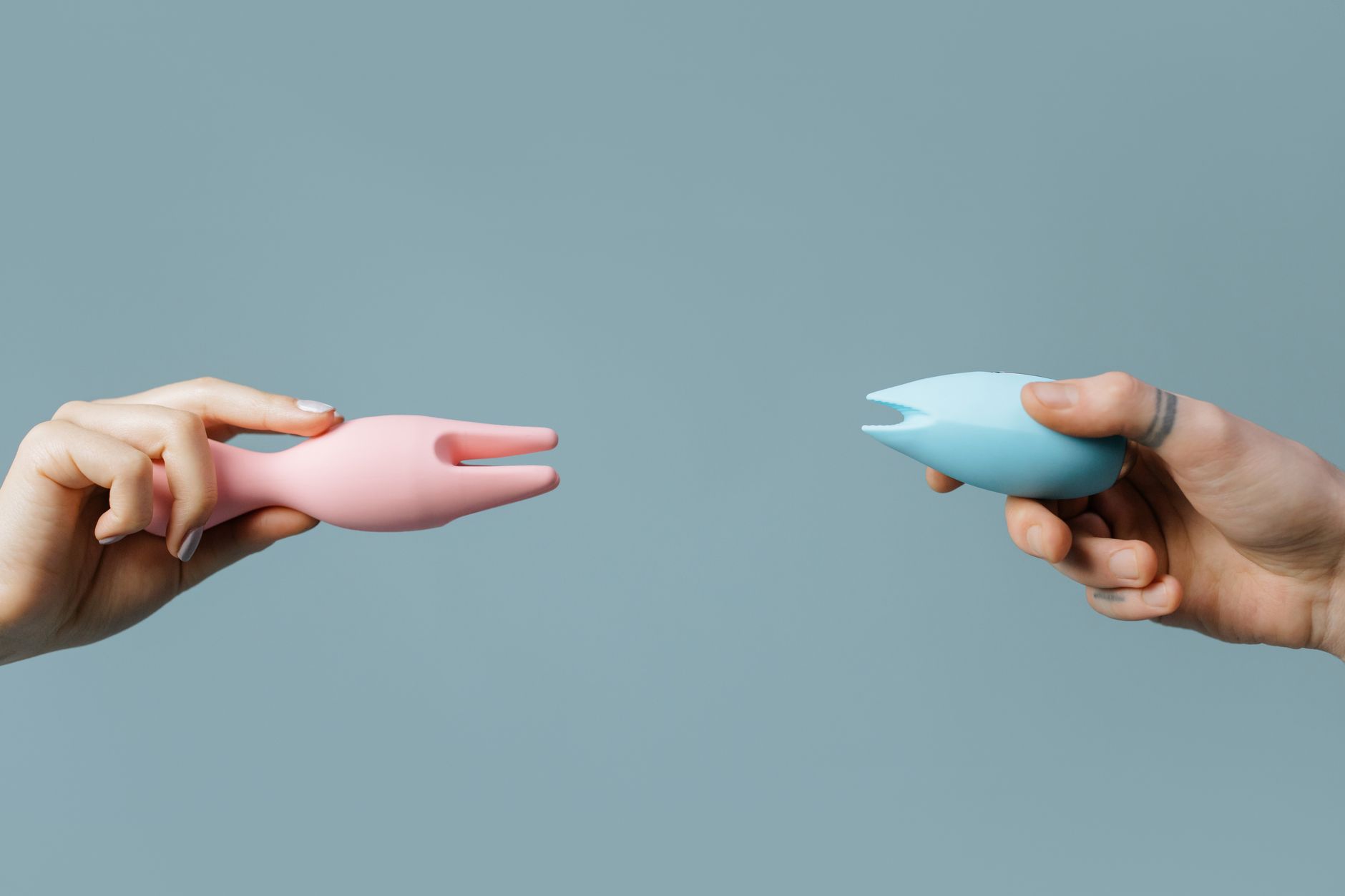
When your partner pulls back
Here's the thing: your partner isn't uninterested in the toy. They're uninterested in something the toy represents. Maybe it feels like a threat. Maybe it signals a problem they're not ready to name. Maybe they're just embarrassed. None of those feelings have anything to do with whether a Lemon Vibrator would actually feel incredible together. Understanding the difference changes everything.
I work with couples on this weekly. The script usually sounds like: "I think we should try a vibrator" and then a wall of silence, or "I don't think we need that," or the classic "I can do everything you need." These aren't rejections of toys. They're usually rejections of a conversation that feels unsafe.
What hesitation actually signals
When someone resists the idea of introducing a lemon clitoral vibrator, they're often dealing with one or more of these underneath:
Threat to his identity. Especially for men, toys can feel like evidence of inadequacy. His brain runs: "If she needs a vibrator, I'm not enough." This is usually automatic and has zero to do with reality. The clitoris responds to suction-based stimulation in ways that genital friction alone can't replicate. It's not about his technique. It's about the design of the human body. But try explaining neurology during sex anxiety. It doesn't land.
Fear that you're secretly unhappy. If you're bringing toys up "suddenly," your partner might be reading this as a sign that things are broken. They don't yet understand that curiosity and satisfaction aren't mutually exclusive. Better pleasure isn't evidence of worse intimacy. It's evidence of ownership over your own body.
Embarrassment. Some people genuinely haven't been exposed to sex toys as normal. They find them awkward, clinical, or embarrassing to discuss (let alone buy or use). The lemon vibrator feels less like pleasure and more like a trip to a health clinic. That's a comfort problem, not a desire problem.
Loss of control. Toys introduce an external variable. If your partner has been the primary architect of your pleasure (or believed they were), toys make them less essential. Some people feel that loss acutely, even if they can't articulate it.
Genuine concern about sensation. A few partners worry that vibrator use will make you less responsive to touch, or that you'll need more and more intensity. This one has zero scientific backing, but it's a concern I hear often. It needs a direct, evidence-based answer.
How to read resistance before you respond
Don't lead with "I want to try a vibrator." Lead with curiosity about what's actually happening under the resistance.
If your partner says "I don't think we need that," the question is: "What does that mean to you?" Not defensive. Just open. Let them talk first. You'll learn whether they think the toy is unnecessary (a misunderstanding about pleasure) or whether they feel replaced (an emotional issue).
If the response is vague ("I just don't like the idea"), you can ask: "Is it about the toy itself, or something the toy brings up for you?" This separates the object from the emotion. Nine times out of ten, it's the emotion.
If they say something that sounds like shame or embarrassment, that's treatable. That's a conversation, not a wall.
Building the actual case (before you buy anything)
Once you understand what your partner is actually worried about, you can address it directly.
If it's about his adequacy: "The clitoris has a ton of nerve endings concentrated in a tiny space. Suction stimulation activates them in a way that friction alone doesn't. That's not a comment on you or what we do together. It's just anatomy. Think of it like how a massage and a heating pad do different things. Both can feel good. They're just different." Then, importantly: "I'd love to explore this with you. That feels like intimacy to me, not a workaround." Make him a collaborator, not a bystander.
If it's about hidden unhappiness: "I'm bringing this up because I'm happy and curious, not because something's wrong. I actually want more of what we have. I'm just wondering what else is possible." Happiness + curiosity is a completely different energy than "we need to fix this."
If it's embarrassment: Share where you learned about it. "I read about how clitoral suction works differently than vibration, and I'm curious about it" sounds way less clinical than "I want a sex toy." Researchers and sex educators are doing the talking here, not just you. Take some of the personal pressure off.
If it's about sensation: "Studies actually show that vibrator use doesn't numb sensation over time. If anything, people become more aware of what they like." This is true and it matters. Then: "I want to stay responsive to you. I also want to know what I respond to. Both things can be true."
When to introduce the actual product
You're not leading with the Lemon Vibrator box on the bed. You're leading with understanding. Once your partner has expressed what they're actually worried about, you can address it.
If they're still hesitant after an honest conversation, here's what works: "Let's just look at one together. No pressure to use it. I just want to show you what I'm curious about." Then you pull up a product page or image. The lemon clitoral vibrator is discreet, designed thoughtfully, and looks nothing like the clinical tools from the 1970s they might be imagining. Seeing it often shifts the energy. It's a real product from a real brand, not some taboo thing.
Let him ask questions. "What does this button do?" "How does the suction thing work?" "Is this loud?" These are all good signs. Curiosity is the gateway.
The first time together (if you get there)
If your partner moves from hesitant to willing, the stakes feel high. They're not.
Start with layers of separation. You use it while they're close but not directly involved. That gives them time to watch, to acclimate, to feel the energy shift. No pressure on them to do anything. No performance required. This is you exploring. They're witnessing.
If they want to help—to hold it, to guide it, to be part of the rhythm—that's brilliant. But don't require it. Plenty of partners find their own interest once the fear drops away.
Then, once they see that you light up, that it's not clinical or weird or threatening, something often shifts. Curiosity follows pleasure. They might ask to touch it, to understand how it works, to see what patterns feel good for you. That's the door opening.
When hesitation is actually a hard no
If after genuine conversation and understanding, your partner simply says "I'm not comfortable with this," you get to decide what that means for you.
You can:
Use it on your own time, with their knowledge and respect. Wait, and revisit later (people's comfort shifts). Accept it as a limit of the relationship.
What you don't do is sneak. Secrecy around pleasure erodes trust way more than the vibrator ever could. If you're hiding it, the real problem isn't the lemon vibrator. It's the inability to talk honestly about what your body needs.
That's worth addressing separately, with a couples therapist if needed.
The shift that usually happens
I've seen this play out hundreds of times. Hesitation softens when someone realizes that toys aren't about replacing a partner—they're about expanding what's possible together. The lemon clitoral vibrator becomes less "alternative" and more "additional."
Your partner might even discover that watching you experience intensity is hotter than they expected. They might realize they care less about being your sole source of pleasure and more about being present for your pleasure, however it arrives. That's a maturity shift, and it often changes everything about the relationship.
But that only happens if you start with curiosity, not demands. If you lead with understanding, not impatience. If you make space for hesitation without letting it become a dead end.
Your pleasure matters. Your curiosity matters. Your partner's comfort matters too. The three things aren't mutually exclusive. They just require talking.
People also ask
Why does my partner feel threatened by sex toys?
Toys often signal something to the partner's nervous system: "I'm not enough." This is almost always an automatic fear response, not a reflection of reality. The clitoris is designed to respond to suction, vibration, and pressure in ways that fingers or other stimulation alone can't always provide. Using a lemon vibrator isn't a statement about his adequacy. It's a statement about anatomy. But that distinction needs to be named directly. Hesitation often softens once he understands that you can be satisfied with him and curious about toys at the same time.
How do I introduce a vibrator without hurting my partner's feelings?
Lead with the feeling, not the product. Instead of "I want to try a vibrator," say "I'd like to explore more of what my body enjoys. I'm curious about this with you." Make him a collaborator, not a bystander. Ask what comes up for him when you mention it. Listen. Then address the specific worry, whether it's about adequacy, hidden unhappiness, or embarrassment. The conversation matters more than the object.
Can my partner use a lemon vibrator on me, or is it only for solo use?
Partners absolutely can use it on you. Many couples find that handing over the clitoral vibrator deepens intimacy because it requires presence and attention. He gets to watch your response in real time, to adjust intensity, to learn what works. Some partners end up loving the experience of being the one controlling pleasure, especially once the initial hesitation drops away.
What if my partner refuses to discuss toys at all?
Refusal to discuss is different from hesitation. If your partner won't even talk about it, the real issue isn't the vibrator. It's the communication breakdown. This is worth addressing with a couples counselor, because if you can't talk honestly about pleasure, you're likely struggling with other vulnerable conversations too. A professional can help create safety.
How long does it usually take for a hesitant partner to warm up?
It varies wildly. Some people warm up after one conversation. Some take weeks or months of gentle exposure. Some partners never come around, and that's information too. The timeline depends on what's underneath the hesitation. If it's shame or embarrassment, understanding and education help quickly. If it's deeper insecurity about adequacy, it might take time and repeated evidence that you're not going anywhere.
Is it normal for my partner to want to use the vibrator during sex with him?
Completely normal. Many partners prefer it. Some enjoy holding it while you're together. Others like the energy of watching you use it during intercourse. The toy becomes part of the shared experience, not a replacement for connection. In fact, using a lemon clitoral vibrator during partnered sex often deepens intimacy because the intensity and pleasure are mutual focus points.