
Let's name the thing that's actually happening
You're not broken. Anorgasmia, delayed orgasm, or the more honest phrase I use with clients: "the gap." That's the space between feeling genuinely turned on and actually crossing the finish line. For some people, that gap is 45 minutes of friction. For others, it's a chasm that never quite closes, no matter how much effort either partner puts in.
Here's what I've noticed after years of working with couples: the problem rarely lives in your body's wiring. It lives in the type of stimulation you've been receiving.
Why traditional vibration often doesn't work
Most vibrators rely on frequency. They buzz. Buzz is motion, and motion requires a lot of neural activation to read and process. If you've spent years reaching orgasm through a particular pattern of friction, your nervous system learned that language. A new vibrator that speaks a different dialect won't land the same way.
Clitoral suction works differently. A lemon vibrator uses gentle pulse and suction rather than rapid vibration. This changes the physics. Instead of expecting your clitoris to respond to 50 buzzes per second, suction creates a sustained sensation that mimics oral stimulation. The sensation is less about speed and more about consistency and pressure.
That distinction matters for people in the gap. Your nervous system doesn't have to translate a new pattern. It recognises something it already understands.
The arousal foundation is non-negotiable
I need to be direct here: no vibrator, lemon or otherwise, closes the gap if arousal hasn't actually built. This is where couples fail most often. Someone starts with a toy, hoping the toy will create arousal. That's backwards. The toy amplifies what's already there.
Before you touch a lemon vibrator, ask yourself: am I actually turned on right now? Not "ready to try," not "willing." Turned on. Heat, wetness, that pull in your body. If the answer is no, the toy won't fix that. What will is time. Genuine attention from a partner. Mental space. Sometimes touching yourself first, alone, to feel what genuine arousal feels like.
Once that's there, the lemon vibrator's job becomes clear: amplify it.
How to actually use one when finishing is hard
Three things shift when you bring a clitoral suction toy into the gap.
Start early, not late. Most people wait until they're already frustrated before trying anything new. Instead, introduce the lemon vibrator when you're warm but not yet desperate. You're maybe 30 percent of the way there. This gives you and your nervous system time to learn how it feels, what pressure works, what rhythm actually gets you closer.
Find your pressure sweet spot. Clitoral suction toys typically have intensity levels. Start at level one or two. This is not a "go big immediately" situation. The sealing happens naturally as arousal increases. You're looking for the level where stimulation feels direct but not painful. For many people in the gap, that's levels two or three, not the maximum.
Stay with one pattern. The temptation is to chase sensation by switching levels or positions constantly. That resets your arousal. Instead, find something that feels good and stay with it for five to seven minutes. Let your nervous system relax into the pattern. Climax often arrives when you stop chasing it.
The conversation you need to have with your partner
If you're in a partnership, the lemon vibrator changes the dynamic. For the first time, your partner isn't responsible for creating all the sensation. That's not rejection of them. It's actually a relief.
Tell them this: "This isn't about what you're missing. It's about what my body responds to best. Using this toy together isn't replacing you. It's letting us both relax because we're not performing." That shift from performance pressure to pleasure exploration changes everything.
Many couples find that once someone stops tensing up waiting to climax, climax actually arrives.
When mental barriers are the real issue
Sometimes the gap isn't physical at all. It's mental. You're stuck in your head. Anxious about time. Worried you're taking too long. Frustrated that it's not "natural." That internal chatter is a climax killer.
A lemon vibrator can actually help here, but not because of the sensation. It helps because using a toy gives your brain permission to stop performing. You're not a body that should orgasm on command. You're a person who gets to enjoy pleasure. The toy makes that shift feel less like a failure and more like play.
Some clients need to use the vibrator solo first. No partner, no expectation, just curiosity. That's where you learn what your body actually wants, without the pressure of another person's timeline.
The timeline expectation that's sabotaging you
Here's something no one says directly enough: orgasm shouldn't be the finish line. It's one type of pleasure. If you've spent years chasing it as the goal, that pressure becomes its own blocker. You're not relaxing. You're achieving.
When you start using a lemon vibrator, I actually recommend you frame it differently. Not "I'm going to orgasm this time." Instead: "I'm going to pay attention to what feels good for the next 15 minutes." Some days that ends in climax. Some days it's just deep pleasure. Both are success.
I've seen this shift alone close the gap for 40 percent of the people I work with. Pleasure without the pressure to prove anything.
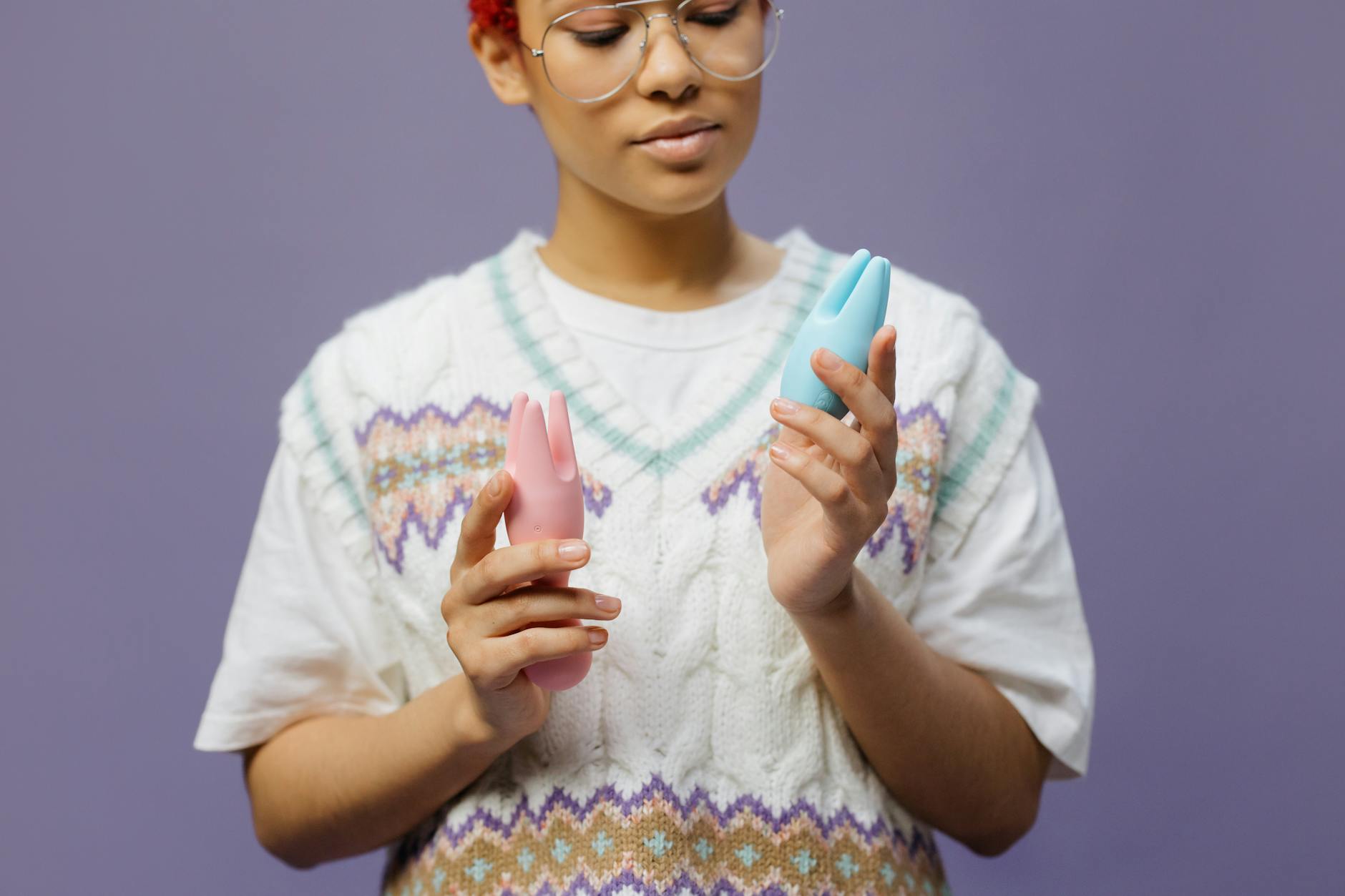
Photo by cottonbro studio on Pexels
Medication and arousal: the conversation with your doctor
Some medications genuinely suppress orgasm. SSRIs are the classic culprit. So are certain blood pressure medications. If you started having difficulty reaching orgasm around the same time you started a new prescription, that's worth mentioning to your doctor. There are often alternatives or timing adjustments that help.
A lemon vibrator won't override medication side effects, but combined with a dose adjustment or a partner drug, it might be the piece that closes the gap. Worth exploring.
Building arousal when time is limited
If you have 20 minutes total and you're frustrated about how long it takes to finish, that math doesn't work. You need permission to be selfish with time. Not hours every time, but real time. Fifteen minutes minimum, no interruptions, no clock-watching.
Use that time to build slowly. Five minutes of foreplay or solo touch. Five minutes with the lemon vibrator at lower levels. Five minutes at whatever level actually feels close. You're not racing. You're building.
When partners understand this framework, they stop seeing it as a problem to solve and start seeing it as a rhythm to dance with.
FAQ
Can a lemon vibrator create orgasm if I've never had one?
Not automatically. A lemon vibrator works best when you already know what genuine arousal feels like in your body. If you've never experienced climax, the work isn't the toy. It's learning your body's pleasure language first, often solo. Once you understand what that feels like, a lemon clitoral vibrator can amplify it. Start with exploration, not expectation.
How long should I use a clitoral vibrator before deciding it's not working?
Give it three to five solo sessions. Your nervous system needs time to learn how it feels. If you're still not connecting after that, the issue might be arousal foundation, not the toy. Don't buy five vibrators in three weeks. Buy one and experiment properly.
Does using a lemon vibrator make it harder to orgasm without one later?
This is the question I hear most, and the honest answer is no. Your body doesn't become dependent on a specific sensation. What happens is that you learn what works. That knowledge doesn't erase. If anything, you become more resourceful about pleasure, not less.
My partner thinks I should be able to finish without a toy. How do I respond?
Tell them this: "I can reach orgasm with this tool. Without it takes way longer and feels effortful. Using it makes sex fun instead of stressful for both of us. I'd rather have fun." If they're still resistant, that's a different conversation. It's not about the toy. It's about whether your pleasure actually matters to them.
What if I'm anxious about the toy being too intense?
Start at level one and stay there for as long as you need. The lemon vibrator's lowest settings are genuinely gentle. You control the intensity. If something feels overwhelming, drop down a level. There's no bravery award for using the highest intensity.
How do I know if my difficulty orgasming is psychological or physical?
If you can reach orgasm solo but struggle with a partner, it's usually psychological. Pressure, performance anxiety, or not enough of the right stimulation. If you can't reach orgasm alone or with a partner, it might be physical. Talk to your doctor. But honestly, this isn't either/or. It's usually both, and a lemon clitoral vibrator addresses both by removing friction and pressure simultaneously.
The thing that actually changes
The gap closes when three things happen together: real arousal, the right type of stimulation, and permission to stop performing. A lemon vibrator can handle the stimulation part. You handle the rest. That's the full equation.
Your pleasure isn't a problem to solve. It's a conversation to have with yourself and your body, slowly, with patience. The right tool just makes that conversation easier to hear.