
Here's the thing about slow intimacy
Fastness masquerades as passion. We've been sold the idea that intensity equals connection, that racing toward the finish line is what good sex looks like. Then you hit a moment where you actually pause and think: I want to feel this differently. I want to be present. I want to know my partner again.
That's not a sign something's broken. That's you wanting something real.
The problem is that slowing down solo doesn't always work the same way partnered sex does. Your brain gets impatient. Your body falls into old patterns. You default to speed because speed is easier, more automatic, less vulnerable. This is where lemon clitoral vibrators become genuinely useful. They're not about going faster. They're about shifting how you experience sensation entirely, which actually forces slowness.
Why speed becomes the default
Most people approach sex like a destination. You're trying to get somewhere, and the faster you move, the sooner you arrive. We learn this early and never unlearn it. With a partner, speed also becomes a way to avoid intimacy without noticing. You can have sex and never actually look at them. You can be physically close while mentally miles away.
But slowing down isn't romantic softness. It's neurological. When you rush, only your most automatic arousal pathways activate. Your amygdala stays partially engaged (that's your threat-detection system). Your prefrontal cortex, which handles presence and connection, gets sidelined.
Slowness requires your whole brain. It means noticing sensation instead of chasing it. That's harder. That's also why it matters.
What a lemon vibrator changes about slowness
Clitoral suction technology (the kind Lemon Vibrator uses) works differently than traditional vibration. Instead of forcing your body to match a pattern, suction invites a rhythm. You control how deep the sensation goes, how long you stay in it, whether you move or stay still.
This changes everything about intimacy because it removes the pressure to perform. With traditional vibrators, you feel the clock running. You know there's a finish line. Suction-based stimulation doesn't have that urgency built into it. You can spend twenty minutes at low intensity without feeling like you're stalling. The sensation itself doesn't demand speed.
When you're with a partner and you introduce a clitoral vibrator, it also shifts the dynamic. Suddenly you're not racing against your own body's responses. You're both watching what actually feels good in real time. You're collaborating instead of performing.
How to actually slow down (alone first)
Let's start solo because that's where you learn the skill. Speed in partnered sex is often a mirror of speed in solo sex. If you've never experienced slow pleasure on your own, it's hard to ask for it with someone else.
Set twenty minutes aside. Not an hour. Not ten. Twenty is long enough to feel different without feeling like you're testing willpower.
Start clothed or with clothes on. Touch yourself over fabric. Let arousal build before you introduce the vibrator. This sounds basic, but most people skip this. They grab the lemon vibrator, turn it on, and wonder why it doesn't feel transcendent. Arousal is a state. You have to create it first.
When you do use the vibrator, start at the lowest setting. The Lemon Vibrator's gentler patterns are designed for presence, not speed. Spend a few minutes just noticing what that feels like. What's the texture of the sensation? Where in your body does it resonate? Does it feel better with pressure or with lightness?
Don't chase orgasm. This feels counterintuitive. You've been conditioned to think the goal is the goal. But slowness is a different goal entirely. The goal is to notice, to feel, to be present. Orgasm might come. It might not. Either way, you've had something most people never experience. You've had presence.
When you bring this into partnered intimacy
This is where intention really matters. Talk about it first. Not during sex. Before. Say something like: I want to try something different this week. I want to slow down. I want to try using a vibrator not to reach an orgasm faster, but to spend more time feeling things.
Most partners get it. Some are relieved. They've been rushing too.
Start with foreplay that has zero time pressure. No clocks. No sense that you're building toward anything. Touch each other. Breathe. When it feels natural, introduce the vibrator. Let your partner see what you like. Let them hold it while you guide the intensity. Let them watch your face.
This sounds intimate because it is. You're showing someone exactly what your pleasure looks like without performance. That's vulnerability.
If your partner is inside you while you use a lemon vibrator, the sensation changes again. Clitoral suction plus penetration creates a complexity that fast vibration can't match. You feel multiple things at once. Your body can't rush because it's too busy receiving from multiple points. Slowness becomes automatic.
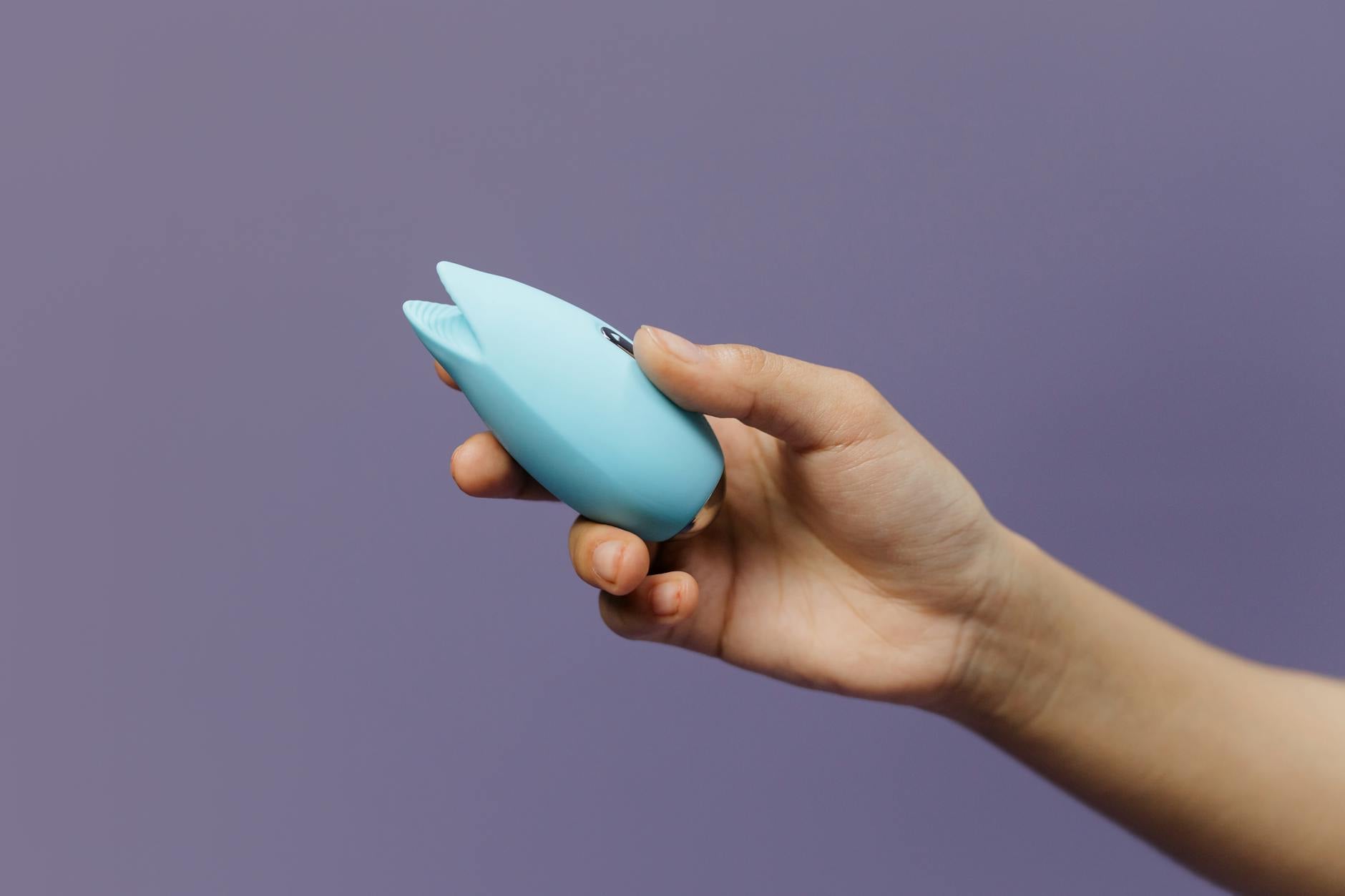
Photo by cottonbro studio on Pexels
The mental shift that has to happen
Slowness fails most of the time because people don't actually want it. They say they do. But when they start, their brain panics. This is taking too long. Am I broken? Why isn't this working faster?
Your brain is pattern-matching against years of fast sex. This will feel wrong for about three sessions. That's normal. Stay anyway.
The shift happens when you realize you didn't reach an orgasm in twenty minutes and you don't care. You felt something complex and layered and genuinely interesting. Your body spent a long time in arousal instead of rushing through it. Your brain got to be both in control and surrendered at the same time.
This is the opposite of what speed gives you. Speed gives you relief. Slowness gives you presence.
Why lemon vibrators specifically help with this
Clitoral suction creates a different kind of stimulation than traditional vibration. When you're using something like a Lemon Vibrator, you're not chasing intensity. The sensation is consistent. This means you can actually relax into it instead of tensing against it. Relaxation is what allows slowness. Tension is what creates speed.
The patterns are also fewer but more subtle. Instead of eighteen different vibration modes that all feel like the same rushed energy, you get a few patterns that feel genuinely different from each other. This actually supports slowness because there's less to chase. You stay with one sensation longer instead of endlessly scrolling for the next thing.
If you've been struggling with how to use a lemon vibrator when you want deeper stimulation during partnered sex, slowness is part of what creates depth. It's not just about physical sensation. It's about time. It's about attention.
The communication piece (the part nobody talks about)
Slowing down is vulnerable. You're asking your partner to stay present instead of chasing a feeling. Some partners resist because fast sex requires less emotional availability. It's safer.
If you hit that resistance, it's worth having a bigger conversation. Usually people rush intimacy because they're anxious, because they're avoiding something, or because they never learned another way. A vibrator can't fix that. A conversation can.
But often, once one person slows down, their partner follows. Presence is contagious. Once you experience what it's like to actually feel your partner, to watch their face, to stay in arousal instead of rushing through it, it's hard to go back to speed.
What to expect from your body
Slowness can take longer to reach orgasm. That's real. Your nervous system is used to a certain trajectory. Changing it takes time. Some people find their orgasms are actually more intense when they slow down. Others find they come more easily because there's less pressure. Most people find something different happens every time.
The point isn't the orgasm though. The point is the presence. If you come in forty minutes instead of five, but you were fully there for all forty minutes, that's a win.
Sometimes you won't come at all. That's also fine. Slowness isn't a means to an end. It's the whole thing.
Bringing it all together
Slowness requires three things: intention, a partner (or a committed version of yourself) who's willing to try it, and a tool that doesn't push you toward speed. A lemon vibrator does that. It's consistent. It's responsive to what you need. It doesn't have an agenda beyond what you're actually experiencing right now.
Start solo. Get comfortable with presence. Then invite your partner into it. Then see what intimacy looks like when you're actually there for it.
Your pleasure matters more when you're present for it. A clitoral vibrator is just permission to slow down and notice.
People also ask
How long should I spend using a lemon vibrator for slow intimacy?
There's no perfect number. Start with twenty to thirty minutes. That's long enough to feel different without feeling like you're forcing slowness. The point is length, not duration hitting some magic threshold. What matters is that you're not racing. If you usually finish in five minutes, twenty feels impossibly slow at first. That's the whole point. Your nervous system is learning a new gear.
Can I use a lemon vibrator for slow sex if my partner and I have mismatched sex drives?
Yes. Actually, this is one of the better uses for it. When someone has higher desire and someone has lower desire, speed often makes it worse. The higher-desire person rushes and the lower-desire person feels pressured. Slowness changes that dynamic. You're not chasing the finish line together. You're just staying present. Sometimes lower-desire partners find they actually enjoy sex more when the pressure comes off and they have time to genuinely get aroused.
Is it normal to feel awkward when you first try slowing down?
Completely normal. Most people have been having fast sex for years. Slowness feels wrong at first. It feels like you're failing somehow. You're not. You're learning a skill. The awkwardness usually lasts two or three sessions. Then your body starts to prefer it.
What if my partner wants to stay fast but I want to slow down?
That's a conversation, not a vibrator problem. You can suggest that you both try slowing down together and see if they like it. Sometimes partners don't realize they're rushing because it's automatic. Once they try presence, they get it. If they still prefer speed, you at least know that about your dynamic. You can figure out what to do with that information. But usually people want to slow down once they realize fast has been the default, not the preference.
Does a lemon vibrator work better for slow sex than other clitoral vibrators?
Clitoral suction vibrators in general are better for slowness than traditional vibration because the sensation is more consistent and less demanding. The Lemon Vibrator specifically is designed with patterns that support presence rather than speed. But what matters most is what your body actually likes. If you prefer traditional vibration, use that. Just keep your patterns low and your time long.
Can slowness help if I've been reconnecting with my body after numbness?
Yes. Numbness often comes from rushing. Your body protects itself by going numb when it's overwhelmed or when you're not actually present. Slowness wakes numbness up. It gives sensation time to register. A clitoral vibrator at low intensity for a long time can help your body remember how to feel. This takes patience. But presence is exactly what healing requires.
The bottom line
Sex doesn't have to be fast to be good. Most of us learned that equation so young we never questioned it. Slowness isn't romantic softness. It's radical presence. It requires you to show up and stay. A lemon vibrator gives you permission to slow down and the sensations that make slowness actually feel good. Everything else is just practice.