Here's the thing about new relationships and sex
You like them. The attraction is real. But then you get into bed and suddenly you're thinking about your ex, or whether you look okay from this angle, or if you're taking too long to finish. The chemistry that felt so obvious over drinks evaporates the moment things get vulnerable.
This happens to most people rebuilding intimacy with someone new. It's not because the relationship is wrong. It's because your nervous system hasn't learned to relax yet.
Why new partners feel harder than they should
When you start dating someone new, especially after a breakup or long stretch of not having sex, your body has to relearn trust on a physical level, not just an emotional one. Your pelvic floor tightens. Your breath gets shallow. Your mind stays half-engaged because you're scanning for threat, even if you consciously like this person.
That hypervigilance kills arousal. It also makes orgasm harder to reach, which then creates a feedback loop of frustration and self-doubt.
The research on this is solid. Couples who introduce sexual aids early report higher comfort levels during sex overall. They're less in their heads, more in their bodies. And they spend less time in that awful place where one partner is waiting for the other to orgasm, both feeling the pressure.
Why lemon vibrators change the dynamic
Unlike penetrative sex, which carries a whole history of expectation and performance pressure, a clitoral vibrator is collaborative. It's not about him or her. It's about the sensation.
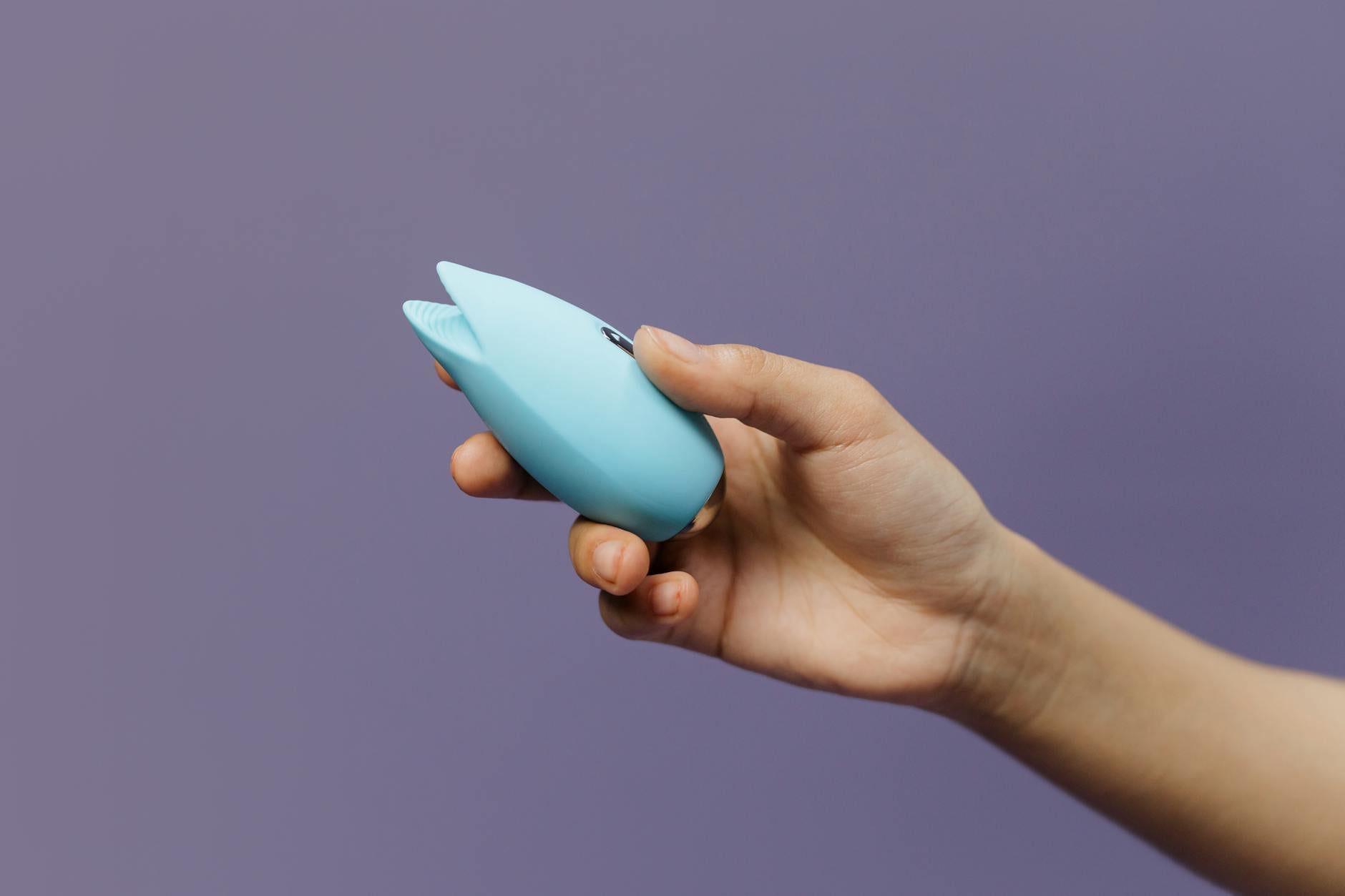
When you introduce a device like the Lemon Vibrator, you're saying something important without saying it: "This isn't about proving anything. This is about what feels good." That shift in framing does more for new relationship anxiety than almost anything else I recommend.
Lemon vibrators specifically work well here because the suction technology doesn't require the same kind of manual coordination as other toys. One partner can focus on touch, kissing, eye contact. The other gets stimulation that doesn't depend on friction or pressure from their body.
It also removes the "Am I doing this right?" question that kills spontaneity. The answer isn't dependent on him or her. It's built in.
The conversation before you bring it up
Don't lead with the toy. Lead with the permission.
Pick a moment outside the bedroom when you're both relaxed. Something like: "I've been thinking about us, and I want to make sure we're both really comfortable exploring together. No pressure, no performance expectations. Just what feels good."
Then listen. If your partner seems hesitant, don't pivot to "It will be amazing." Instead, ask what they're actually worried about. Usually it's one of these:
- "Does this mean you're not satisfied with me?"
- "Will I feel replaced?"
- "Is this weird?"
Each one has a real answer. For the first: you're not replacing him or her, you're adding something that helps you both relax. For the second: toys enhance partnered sex; they don't compete with it. For the third: wanting to explore pleasure together is one of the least weird things a couple can do.
The goal is to make sure both of you understand this is about building comfort, not fixing anything.
How to actually introduce it the first time
Start clothed. Seriously.
Show your partner the device. Let them hold it. Let them see how it works. Normalize it before it appears in a sexual context. This removes the shock factor.
When you do bring it into sex, don't make it the whole event. Use it as part of foreplay, not the main event. You're both still touching, kissing, talking.
One partner holds the vibrator while the other receives stimulation. This is important because it means you're not disappearing into your own pleasure. You're still connected, still communicating, still present with each other.
Start at a lower setting. Let your body acclimate. Pay attention to what patterns feel good, what pressure levels work. This information matters because you'll use it again, and eventually your partner will learn your body's preferences without asking.
That learning is intimacy. That's what rebuilds trust.
What to do if it feels awkward the first time
It probably will. And that's fine.
The first time you do anything new sexually, there's a weird self-consciousness. You're thinking about the thing instead of being in the thing. That's normal. It doesn't mean it won't work.
Here's what I tell couples: do it twice more before you decide if it's for you. The third time, your nervous system will have relaxed enough to actually feel the sensation instead of analyzing it.
If after three times it's still not clicking, that's information too. Maybe you need a different toy, or maybe this particular tool just isn't your thing. That's okay. The point was the conversation and the willingness to explore together. That alone rebuilds intimacy.
The real benefit (it's not what you think)
People assume toys are about faster orgasms or better sensation. Sometimes they are. But what I see in couples is different.
Using a lemon sexual toy together gives you a shared experience of pleasure. It's not competitive. It's not about one person performing for the other. You both get to feel good at the same time, and you both get to witness the other person's pleasure without pressure.
That witnessing is bonding. It's also the opposite of the anxiety spiral that usually happens early in relationships.
After a few times, you'll notice something shifts. You're less self-conscious. You laugh more. You feel safer. Those are the real benefits of introducing clitoral vibrators when you're rebuilding intimacy.
How to keep it from becoming routine
Once you're comfortable, don't let the toy become background noise.
Switch it up sometimes. Different settings. Different times of day. Different contexts. Maybe you use it when you have more time and can really focus. Maybe sometimes it's just a few minutes before other things happen.
Variety keeps you both engaged and curious about each other's body.
Also pay attention to how the tool affects your non-sexual intimacy. If you notice you're more affectionate outside the bedroom, or more likely to initiate touch, that's real. Rebuilding sexual trust has downstream effects on how you relate to each other generally.
When to bring up other variations
Once you're both comfortable with the basics, you can explore variations. Maybe one of you uses the toy while the other focuses on penetration. Maybe you use it during foreplay and then move into other things. Maybe it becomes your shorthand for "I want us to focus on my pleasure for a bit."
These conversations get easier the more you have them. That's the whole point. You're building a language around pleasure together, and that language doesn't include shame or performance anxiety.
Common questions from couples rebuilding intimacy
Here are the ones I hear most, and what I actually tell people.
Will using a toy make my partner feel like they're not enough?
Only if you frame it that way. If you say "I want to use this because you're not satisfying me," yes, that will feel bad. But if you say "I want to use this so I can relax and we can both enjoy this together," it lands differently. The tool is about reducing pressure, not assigning blame.
How do I know if my partner will be into it?
You ask. And you listen without judgment. If they say no, you respect that. If they seem uncertain, you ask what would make them more comfortable. Maybe they need more time. Maybe they want to learn more first. You're not trying to convince them. You're checking in.
What if I want it and they don't?
Then you get curious about why. Is it cultural background? Previous partners? Specific anxiety? Is it about the toy itself or the idea of toys generally? Understanding the actual barrier helps. Sometimes it's a conversation away. Sometimes it takes time. Sometimes it's a genuine incompatibility.
Is it normal to use a toy every time?
Yes and no. There's no "normal" here. Some couples use toys regularly. Some use them occasionally. Some use them only in specific contexts. What matters is that you've talked about it and you're both on the same page.
How do I bring it up without making it weird?
Casually. "I've been thinking about trying something together. Would you be open to that?" That's it. You're not pitching it. You're checking for openness.
What if we try it and it doesn't work?
Then you've learned something. You've shown your partner that you're willing to explore together. You've had a conversation about pleasure that most couples never have. That foundation matters, even if this particular tool isn't for you.
The bigger picture
Rebounding into sexual intimacy with a new partner is hard because your nervous system has to relearn trust. Introducing toys like lemon clitoral vibrators isn't about fixing anything broken. It's about creating conditions where trust can rebuild more easily.
You're removing performance pressure. You're sharing pleasure instead of one person waiting for the other. You're communicating about what feels good. You're building a shared experience that doesn't rely on either person being "enough."
That's not just better sex. That's better intimacy, which is what rebuilding is actually about.
If you're unsure where to start, the Buying Guide walks you through how different toys work and which might feel right for your specific situation. And if you want to talk through any of this—the conversation, the timing, how to handle pushback—we're always here at /contact.