
Let's be real about the elephant in the room
Nearly every couple I work with wants to try something new in the bedroom. Nearly none of them know how to bring it up without sounding weird, needy, or like they're asking their partner something's wrong. The silence around vibrators in particular is massive. One person is curious. The other person is nervous. Neither person wants to be the first to say it out loud.
Here's what happens instead: someone drops a link in a chat they weren't ready to send, or mentions it after a drink and immediately regrets it, or just... never brings it up and carries that small frustration forward. That's the pattern I see most. And it costs people years of pleasure they could've had.
The good news is that introducing a lemon vibrator to partnered sex is genuinely easy once you separate the conversation about the toy from the conversation about your relationship. And once you have that conversation, using it together becomes straightforward and often really hot.
Why the nervousness is normal and also fixable
Nervousness about toys rarely comes from the toy itself. It comes from three things: you're worried your partner will feel replaced, or judged, or like something's "wrong" with what you have. Your partner is worried they're not enough, or that wanting pleasure means they're not satisfied with you, or that they'll do it "wrong." Both of you are probably worried it'll be awkward.
None of this is about the vibrator. It's about safety and belonging. Once you know your partner isn't going anywhere and isn't judging you, the nervousness collapses pretty fast.
The conversation starter that actually works
Don't lead with the toy. Lead with curiosity about them.
Pick a calm moment when you're not already in bed and neither of you is tired or stressed. Say something like: "I've been thinking about us, and I'm curious about something. When we're together, what would make the experience even better for you?" Or: "I read something about clitoral suction toys and I'm genuinely wondering if that's something you'd be interested in exploring together. No pressure either way." The key is making it about exploration, not about what's missing.
Listen without defending. If your partner says no, that's real data. If they say yes but seem hesitant, there's usually a specific worry underneath. Ask: "What's your hesitation?" Not dismissively. Actually curious. Often it's: "I'm worried it'll hurt," or "I don't know how to use it," or "Won't it make things weird?" Those are all solvable.
If they say yes and mean it, you've just crossed the biggest hurdle.
Choosing the lemon vibrator for this specific moment
Why lemon vibrators work well for nervous couples is that they're intuitive and less intimidating than traditional vibrators. The suction design feels different than a typical buzzing toy. It's gentler. There's no learning curve for your partner to feel self-conscious about. The sensation is also less intense on the clitoris if your partner is worried about overstimulation, which is something I hear a lot from people new to toys.
When you're buying together, buy in person or order and open it together. Knowing what it looks like, feels like, and how it operates makes it less mysterious. Read the care instructions together if it helps. That's not a chore. That's you moving through something as a team.
Your first time using it together
Start with the toy in the room, not in use. You're just getting used to it being there. Have sex like you normally would. No pressure to incorporate the vibrator on night one. Knowing it's accessible removes some of the awkwardness.
When you do use it, the best approach is usually for your partner to hold it and control it themselves. This gives them autonomy and removes the performance element. They're exploring their own body. You're present and involved, but not operating something on someone else's most sensitive area while you're both figuring it out.
Start with low settings. The intensity usually feels stronger than your partner expects. Lower settings let them find the sensation that actually feels good versus just feeling intense.
Talk during. "How does this feel?" is not a buzzkill. It's what makes the experience collaborative instead of one person wondering if the other person is okay. I've worked with couples who thought using a toy would reduce intimacy. The opposite happened because they had to communicate more.
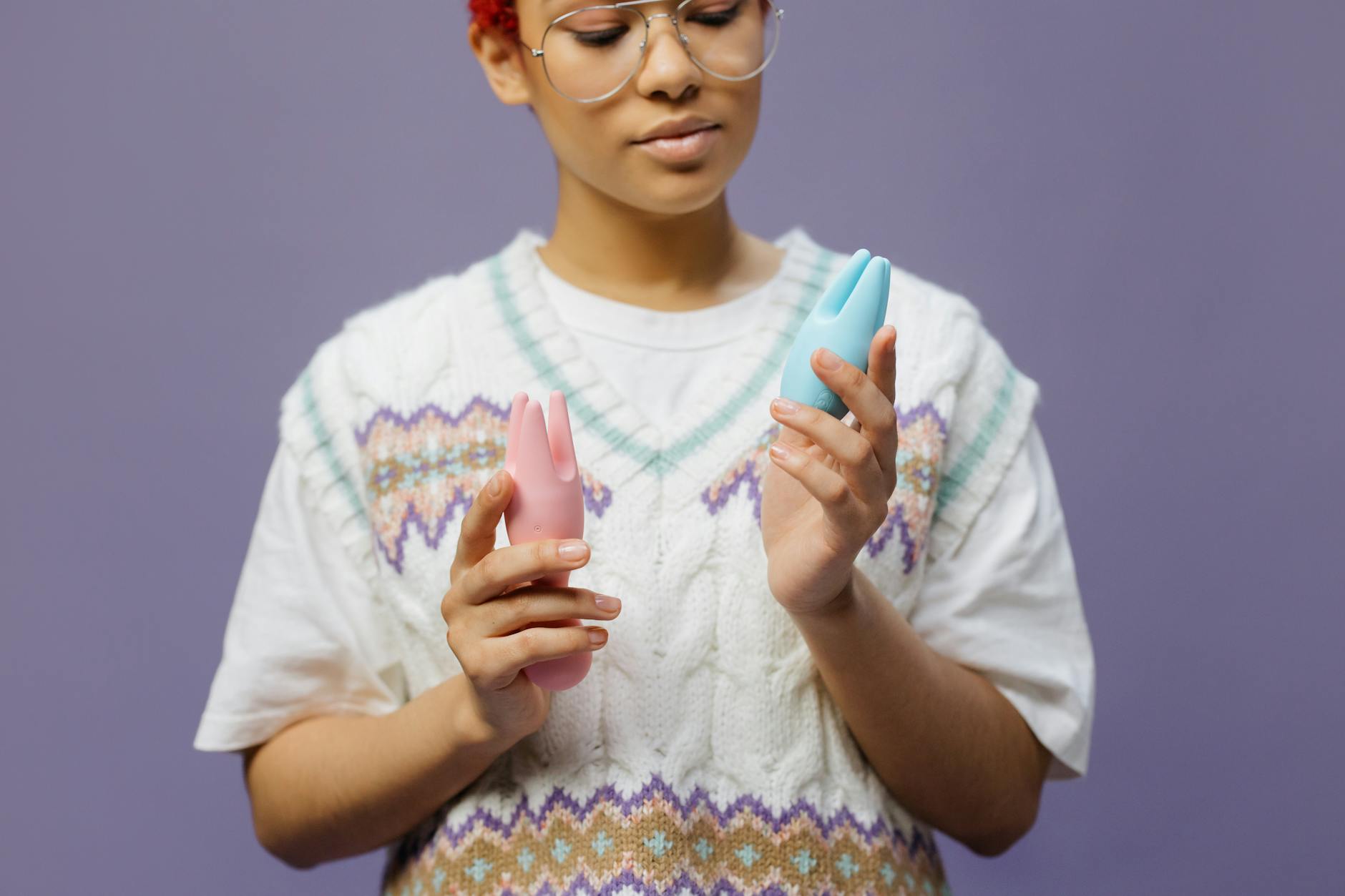
Photo by cottonbro studio on Pexels
What to do if something feels off
Sometimes one partner panics the first time. They feel intense pleasure and it scares them a little. That's common and it's fine. Pause. Ask what happened. Often it's: "I didn't expect it to feel that strong," or "I got in my head about whether I looked okay." Both of those are addressable. Lower the setting. Turn the lights off if that helps. Take a break and try again later. There's no rush.
If your partner wants to stop, you stop. That's nonnegotiable. Stopping immediately and without resentment builds the safety that makes your partner want to try again. If you push through or act disappointed, your partner learns that their comfort matters less than your curiosity. That's not the foundation you want to build.
Sometimes one person is way more excited than the other. That's also normal. Let enthusiasm settle. The person who's eager can ease off the expectations. The person who's cautious gets more time to warm up. This isn't a race to incorporate toys permanently. You're just adding another tool to your repertoire.
Moving into regular partnered use
Once you've used the lemon vibrator together a few times, the novelty wears off and it becomes just part of what you do. Some couples use it every time. Others use it occasionally. Some find it works best during specific types of partnered sex or at certain points in your cycle.
The rhythm usually is: your partner learns what they like through solo exploration. Then you explore together how that translates to partnered sex. How to use a lemon vibrator for deeper stimulation during partnered sex covers that transition in more detail.
If one of you loses interest in using the toy and the other wants to keep it in regular rotation, that's a conversation too. Not a fight. Just data. "I notice I'm more into using this than you are. What's going on?" might surface something useful. Maybe one partner finds it works best for specific kinds of sex. Maybe the initial excitement faded and that's normal. Maybe something genuinely isn't working and needs troubleshooting.
Why this matters for your relationship
Introducing a lemon vibrator isn't about fixing something broken. It's about deciding together that your pleasure matters enough to explore. It's about being vulnerable in a low-stakes way. It's about learning that you can ask for something without your partner feeling threatened or judged.
Those skills transfer everywhere. The couples I've worked with who successfully navigated introducing toys became more comfortable asking for other things too. Feedback about kissing. Timing preferences. Emotional needs. Suddenly the model exists: you can say what you want, your partner can listen without taking it personally, and you both get closer.
That's not about vibrators. That's about intimacy. The toy is just the doorway.
Common questions people ask about using lemon vibrators as a couple
Will using a toy make my partner feel like they're not enough?
Not if you frame it right. A vibrator isn't a replacement for your partner. It's an addition. The experience of your partner touching you while you use a clitoral vibrator is fundamentally different than using it alone. The presence, the eye contact, the kissing, the emotional connection. That's the point. You're expanding what you can experience together, not replacing what you have.
What if one of us is really enthusiastic and the other isn't into it?
Then you have different timelines. That's fine. The person who's not convinced doesn't have to use it. The person who is into it can explore solo pleasure. You revisit the conversation in six months. Sometimes people need time to warm up to an idea. Sometimes they never do. Both are okay.
Is it messy?
No. Water-based lubricant helps, but it's not like anything leaks everywhere. Grab a towel if it makes you feel better. It's a practical consideration, not a dealbreaker.
What if I genuinely have no idea how to use it?
There's usually a manual. Read it. YouTube has tutorials. You could also try it solo first so you're not learning in front of your partner. Nothing kills confidence like fumbling with settings while someone's waiting. A quick solo run-through means you walk into the partnered moment knowing the basics.
How do I know if my partner actually wants to try this or if they're just saying yes to make me happy?
You ask directly. Not during sex. In a conversation where they have space to think. "I want to make sure you actually want this and aren't just doing it because I want it. Real talk." If they pause or hesitate, there's something underneath. Ask what it is. Sometimes it's just: "I'm nervous," which you can work with. Sometimes it's: "I don't actually want to, but I didn't want to disappoint you," which is also useful data.
What if using a lemon vibrator together feels awkward for months?
It might. That's okay. Awkward becomes normal with repetition and laughter. The couples I work with who successfully navigated initial awkwardness talk about the moment it stopped being weird and just became part of their sex life. That usually takes a few tries. You're allowed to feel awkward and keep going anyway.
Can we use a lemon vibrator if one of us is self-conscious about our body?
Yes. Honestly, using a toy together sometimes makes people feel safer because the focus shifts from "is my partner looking at my body?" to "what do we experience together?" Dimmed lights help. The mental piece helps more. Knowing your partner is focused on your pleasure, not your appearance, changes everything.
The bottom line
Honestly though, the nervousness you feel right now is the biggest obstacle. The actual using-it-together part is usually fine once you're past the conversation. You don't need to be a sex expert. You don't need the perfect moment. You just need to decide together that your pleasure matters and that you're willing to be a little awkward to get there.
Most couples find that's when things actually get interesting.