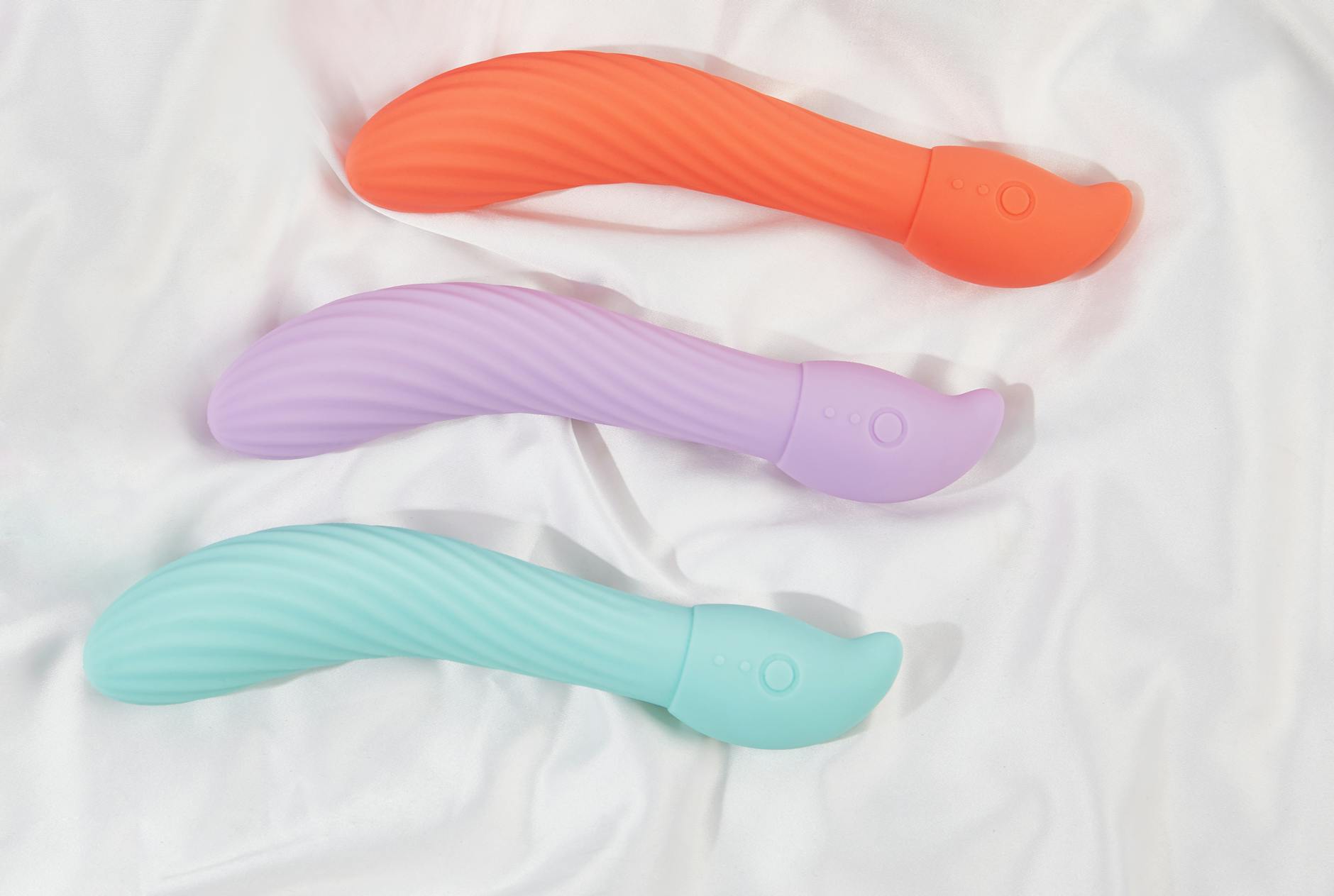
When desire stops feeling like itself
Let's be real: hormonal shifts scramble the desire signal. You're not broken. Your brain didn't stop wanting pleasure. What changed is the speed of the spark, the shape of the arousal curve, and which physical touch actually lands anymore.
Here's what makes lemon vibrators specifically useful during this window.
How hormones reshape arousal pathways
When estrogen, testosterone, or progesterone fluctuate, three things happen to the arousal response.
First, blood flow to the clitoris takes longer to ramp up. That means the teasing touch that used to work in 30 seconds now needs two minutes. The neural sensitivity doesn't disappear. The delivery system just slowed down.
Second, the clitoral tissue itself changes texture. It becomes less engorged as a baseline, which means direct, intense vibration can feel jarring or numb rather than building. Air-suction lemon vibrators work differently. They use gentle pressure changes instead of friction, which means they stimulate the surrounding nerves without hammering tissue that's already tender.
Third, your capacity for pleasure is completely intact. The clitoris has 8,000 nerve endings. Hormones don't erase them. They just change how quickly and through which patterns those nerves light up.
Why suction-based stimulation works better after hormonal shifts
When you use a lemon vibrator (or any clitoral suction toy), you're not relying on direct vibration hitting one spot repeatedly. Instead, you're creating a gentle seal that uses air pressure to stimulate the tissue. This matters for desire restoration for two specific reasons.
First, it bypasses sensitivity overload. After hormonal shifts, your clitoris often feels either numb or oversensitive. There's almost no middle ground. Lemon vibrators let you control the sensation through rhythm and pattern rather than raw power. You can start at pattern one, which many people describe as barely-there, and work up only as far as feels good. That sense of control often rebuilds confidence and reconnects you to your own pleasure.
Second, it works with tissue changes, not against them. Thinner, less vascular tissue doesn't respond well to aggressive friction. Suction stimulation distributes pressure across a wider area, so it feels gentler on sensitive skin while still triggering intense pleasure responses deep in the clitoral structure.
The desire-specific patterns that matter
Most clitoral vibrators have one job: go fast. Lemon vibrators at Hello Nancy come with rhythmic patterns designed specifically for desire patterns.
Pattern one or two (the slow pulsing ones) work best when you're rebuilding desire from scratch. These aren't exciting. They're informational. They tell your nervous system: "Hey, this is safe, this is manageable, let's try again." Over a few weeks of that signal, desire often creeps back.
Patterns four through seven are where intensity lives, but they're still built around rhythm rather than raw speed. This matters because desire that's been dormant often responds better to a beat than to flat pressure. Your nervous system recognizes the pattern, anticipates the next pulse, and starts leaning into it.
The role of mental permission in desire recovery
Here's the part nobody talks about: the tool isn't doing the heavy lifting. You are.
When desire dims after hormonal shifts, a lot of that is neurological protection. Your body's saying, "This used to feel good, but it changed. I'm confused. Let's pause." That's not a bug. It's your nervous system asking for clear communication.
Using a lemon vibrator (or any solo tool) during this phase serves a psychological function alongside the physical one. You're giving yourself explicit permission to re-explore pleasure on your own terms. You're not waiting for your body to feel like itself again. You're building a new sensation map that works with your body as it is now.
Many people find that solo exploration with a lemon clitoral vibrator reignites desire more reliably than partnered sex during this transition. It's lower stakes. It's quieter. It's about rediscovering your own signal, not coordinating with someone else's.
When to add lube, and why it matters more now
After hormonal shifts, natural lubrication often drops. That doesn't mean your arousal capacity dropped. It means the delivery mechanism changed.
Water-based lubricant with a lemon vibrator becomes less of a luxury and more of a fundamental part of the experience. This is the same thing we recommend to anyone using any clitoral vibrator, but the stakes feel higher when you're already questioning whether desire is coming back.
Lube does two things. It reduces friction (which protects tissue), and it creates a better seal for suction toys, which makes the sensation sharper and more distinct. When sensation clarity is what's rebuilding your desire, that seal matters.
How pelvic floor tension plays into low desire
Here's something that gets missed constantly: desire doesn't live only in the brain or the clitoris. The pelvic floor muscles wrap around the entire erotic nervous system. When those muscles are tight, signals get muted.
Hormonal shifts often increase pelvic floor tension as a side effect. The tissue loses some of its elasticity, and your muscles overcompensate by gripping. This creates a feedback loop where desire stays suppressed because the tension physically prevents sensation from registering fully.
Lemon vibrators can actually help break this loop. As you use one regularly and gently, your pelvic floor learns that sensation is safe. The muscles gradually release. Signals start getting through more clearly. Desire follows.
The timeline for desire return with a lemon vibrator
This is the honest part: there's no universal timeline. Some people feel a shift in two weeks. Others take two months. What I see clinically is that consistency matters more than intensity.
Using a lemon vibrator three times a week for ten minutes, starting at low patterns and building slowly, tends to restore desire-responsiveness faster than sporadic intensive use. Your nervous system needs regular, gentle signals that pleasure is available and manageable.
After about four weeks of consistent use, most people notice that arousal speeds up. Not back to baseline necessarily. Just faster than it was. That's the signal that desire pathways are reactivating.
When to check in with a professional
If desire hasn't shifted after six weeks of consistent, patient exploration with a lemon vibrator, it's worth having a conversation with a healthcare provider or therapist who specializes in the specific hormonal shift you're navigating (menopause, post-pregnancy, medication effects, etc.).
Desire loss can signal that something else is happening: untreated anxiety, unresolved relationship dynamics, medication side effects, or a medical condition worth addressing. A lemon vibrator is a tool for pleasure exploration. It's not a treatment for underlying causes of desire loss.
FAQ: Lemon Vibrators and Desire Recovery
Why does suction feel different from regular vibration when I'm trying to rebuild desire?
Suction stimulates nerve clusters around the clitoris rather than delivering direct friction. After hormonal shifts, that distributed stimulation often feels less jarring and more building. Regular vibration can feel numb or overstimulating by comparison. Suction-based lemon vibrators give you finer control over intensity, which is crucial when you're relearning your own arousal patterns.
Can a lemon vibrator actually increase desire, or does it just help me orgasm?
Both. The physical pleasure triggers neurochemical responses (dopamine, oxytocin) that rebuild desire pathways. But the bigger driver is psychological permission. Using a tool specifically designed for pleasure is a form of self-care that signals to your nervous system that desire matters and that your pleasure is worth pursuing. Over time, that message rewires how you approach arousal.
How do I know if low desire is hormonal or relationship-related?
The simplest test is solo exploration first. If you feel desire returning when you're alone with a lemon vibrator but not with your partner, the issue is likely relational or psychological, not purely hormonal. If desire stays absent solo, hormonal shifts are more likely the primary factor. Many people experience both simultaneously, which is why professional guidance helps.
Should I use a lemon vibrator every time I want to have sex with my partner, or is it just for solo play?
Both work. Some people integrate lemon vibrators into partnered sex for additional clitoral stimulation. Others use them solo to rebuild confidence and then return to partnered sex naturally. Neither approach is better. What matters is what helps you feel pleasure and want more of it.
Is it normal to feel nothing the first few times I use a lemon clitoral vibrator after hormonal changes?
Completely normal. After hormonal shifts, your sensitivity map is literally relearning. The first few sessions are information-gathering, not performance. You're mapping out what sensation feels available at different patterns and rhythms. Pleasure will layer in as your nervous system adjusts. Don't expect fireworks right away.
How does using a lemon vibrator affect my natural arousal over time?
Regular use of a lemon vibrator doesn't desensitize you to natural arousal. It actually tends to do the opposite. As you rebuild your capacity for pleasure solo, your body's arousal response to partnered touch often improves because you've reset the baseline. You've essentially reminded your nervous system that sensation is good and available.
The pathway back to desire isn't linear
Desire doesn't come roaring back. It creeps back. It shows up inconsistently at first. Some days you'll feel nothing with a lemon vibrator. Other days it'll hit immediately. That's the nervous system recalibrating, not a sign of failure.
What lemon vibrators offer is a physical and psychological container for that recalibration. They're a way to stay curious about pleasure during a season when pleasure feels distant. That curiosity, over time, becomes confidence. Confidence becomes desire.
Your desire isn't gone. It's just reorganizing.
More resources on desire and pleasure:
For deeper context on how relationships shift during hormonal transitions and rebuilding connection, explore how lemon vibrators help with reconnection after relationship gaps. If you're navigating anxiety alongside desire changes, why lemon vibrators are ideal for anxiety-driven tension in your pelvic floor breaks down that specific pathway. And for a broader understanding of how sensation changes over time with consistent use, does using a lemon vibrator change sensitivity over time covers the long-term picture.