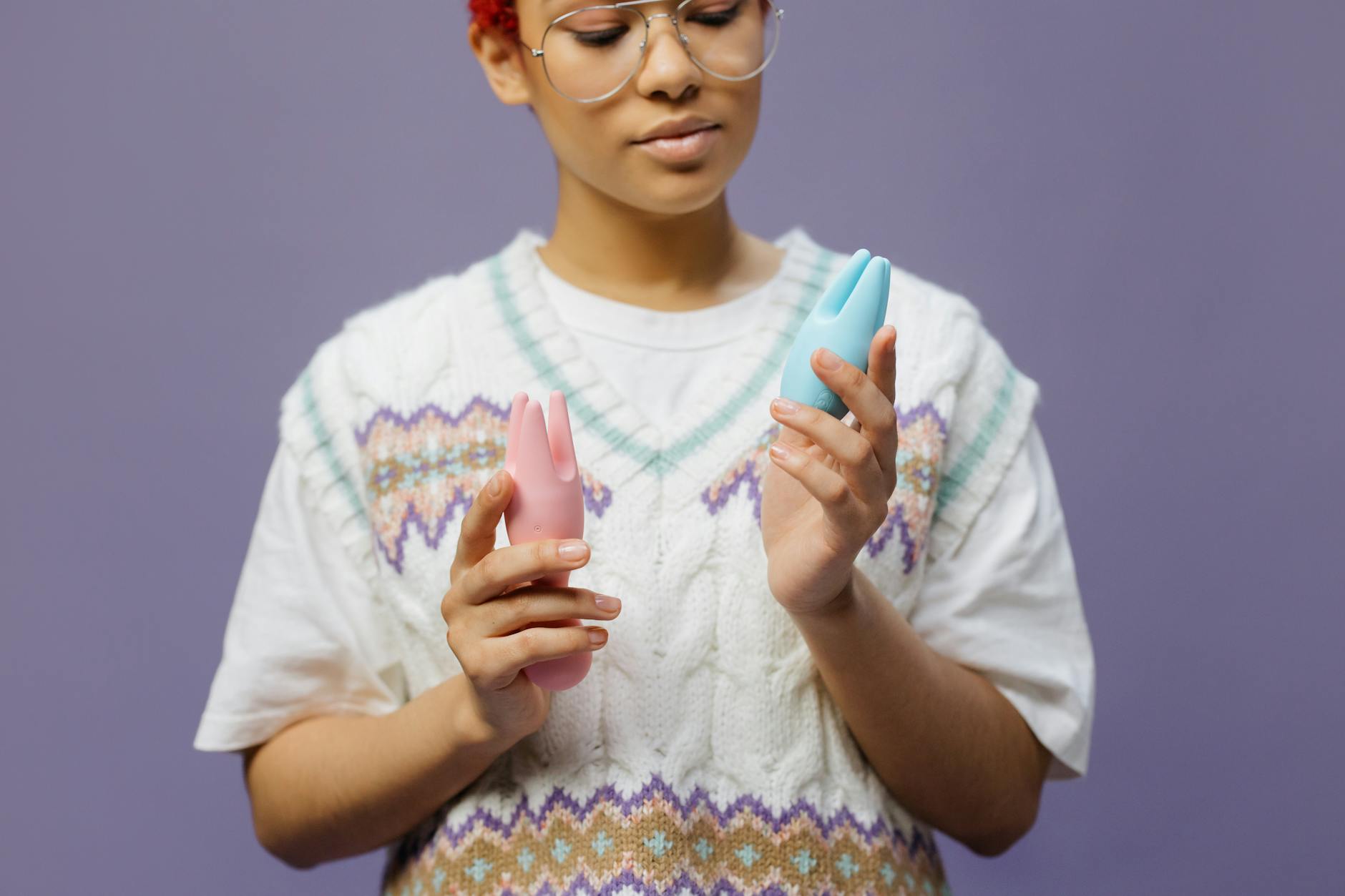
Let's talk about clitoral sensitivity like adults
Your clitoris is not a fixed thing. It changes. Hormones shift it, age recalibrates it, medication alters it, and life events reshape it in ways nobody warns you about. Most people spend their entire sexual life using the same toy the same way, then get confused when their body stops responding the way it did at 25.
The real problem isn't your clitoris. It's that traditional vibrators can't adapt to what's actually happening inside your body.
How clitoral sensitivity actually shifts
Let me break down what's changing and why it matters. Your clitoris has roughly 8,000 nerve endings, and they don't all have the same job. Some respond to pressure, some to vibration, some to temperature, and some to very specific patterns of stimulation. When hormones fluctuate, when you go through major life changes, or as you age, the balance between these nerve clusters shifts.
Estrogen affects tissue thickness around the clitoris. When estrogen is higher, tissue is plumper, and direct vibration feels amazing. When estrogen drops, tissue thins, and the same vibration that used to feel perfect now feels sharp or overstimulating. Testosterone affects baseline arousal and how quickly the clitoris responds to initial touch. When testosterone is present and stable, you might feel ready instantly. When it dips, you need longer warm-up and gentler entry points.
Then there's the nervous system piece. Chronic stress, anxiety, or relationship tension literally dampens clitoral blood flow and nerve responsiveness. Postpartum, post-illness, or after long periods without sex, the whole system takes time to wake up again.
The mistake most people make is thinking this means something is broken. It doesn't. It means your nerve endings are trying to tell you something about what works now.
Why lemon vibrators adapt where traditional toys get stuck
A traditional vibrator has one job: vibrate. You choose a setting, and it stays that setting. If your sensitivity has shifted, you have two options: push through discomfort, or stop using it.
Lemon clitoral vibrators work differently. They use suction. This is the key difference.
Suction creates a broader, gentler pressure gradient. Instead of a tiny motor pushing directly into sensitive tissue at 1,000+ vibrations per minute, suction draws tissue into a soft cup and stimulates the entire clitoral complex, not just the external tip. This matters wildly when sensitivity changes because suction is inherently more forgiving.
When your clitoris is extra sensitive (which happens during certain cycle phases, or if you're newly postpartum, or if you're recovering from a long gap), suction feels good. When sensitivity is lower and you need stronger input, the same lemon suction toy works harder without feeling aggressive. You're not hitting a wall of rigid vibration that's either on or off.
A traditional vibrator is like a drum stick. A lemon suction toy is like a whole hand. One has a fixed point of contact. One adjusts to the shape of what it's touching.
The pattern recognition advantage
Here's something that rarely gets mentioned: clitoral nerve endings are pattern-sensitive. They respond better to rhythmic, cyclical stimulation than to pure frequency. A consistent 30 vibrations per second does one thing. A pattern that builds, holds, releases, and repeats does something neurologically different.
Lemon suction devices, especially when paired with their internal patterns, work with the clitoris's actual preference structure. The suction creates a pressure cycle. The pulsing creates a rhythmic cycle. Together, they trigger the kind of layered stimulation that keeps nerve endings engaged even when baseline sensitivity is lower.
That's why so many people report that when sensitivity has changed—whether from medication, hormonal shifts, or aging—a lemon vibrator still works when nothing else does.
The lubrication variable that changes everything
As sensitivity shifts, lubrication needs change too. This isn't about being broken. It's biology. Thinner tissue needs lubrication to avoid irritation from vibration. Suction works beautifully with lubrication because the seal is more forgiving.
Water-based lube plus a lemon suction toy creates a glide that adapts to the exact contours of your clitoris. The lube isn't just reducing friction. It's creating a cushioned interface between your sensitive tissue and the toy's cup. With traditional vibrators, adding lube sometimes makes the toy slip or feel less responsive. With lemon suction, more lube usually means better sensation because it improves the seal without sacrificing control.
Warm-up time is not a failure
One of the biggest mindset shifts I help my clients with is reframing warm-up time. If your clitoris needs 15 minutes of buildup instead of 5, that's not a downgrade. That's actually a richer experience if you stop fighting it.
Lemon vibrators are incredible for this phase because they work as a warm-up tool in a way traditional vibrators don't. The suction at low intensity feels like foreplay. It's not jarring. You can build slowly without feeling like you're wasting time on a toy that isn't "working." This is particularly crucial when sensitivity has lowered due to hormonal changes, medication, or age. A lemon clitoral vibrator meets you where you are instead of demanding you show up ready.
When sensitivity fluctuates across your cycle
If you menstruate, your clitoral sensitivity is wildly different in week one versus week three. Before ovulation, when estrogen is climbing, the clitoris is more engorged and responsive to direct pressure. After ovulation, as progesterone rises and estrogen dips, the clitoris is smaller and more sensitive to sharp sensations.
Most vibrators ignore this completely. You get one power level, and you're supposed to make it work. That's exhausting.
With a lemon suction toy, you have options within the same device. Lower intensity mid-cycle when you're most sensitive. Higher intensity as ovulation approaches and you need more input. The same toy adapts to your actual cycle without needing to swap devices or adjust your expectations.
The medication and medication-sensitivity connection
Several medications flatten clitoral sensitivity. SSRIs are the most famous, but blood pressure meds, antihistamines, and anticholinergics also dull sensation. Many people don't connect the dots between starting a new medication and a sudden drop in pleasure response. Then they blame themselves or their partner.
Lemon vibrators can't fix medication side effects, but they can work within them better than traditional toys. Because suction is less dependent on feeling a precise vibration pattern, it registers better when overall sensation is muted. That broader, gentler stimulation is actually what you need when you're fighting pharmaceutical desensitization.
Age is not a sensitivity cliff
There's this weird cultural narrative that your clitoris stops working after 40 or 50. Total myth. What actually happens is that baseline blood flow to the genitals decreases slightly, and recovery time between orgasms lengthens. That's it. Your nerves don't disappear.
But the toys designed for high-frequency buzzing do stop working as well. That's not about your body. That's about your toy being a bad fit for changed anatomy.
People over 50 report that lemon vibrators are game-changing specifically because they don't rely on aggressive vibration. The suction works with the tissues you have now, not the tissues you had at 25. One of my clients, who's 58, told me she'd given up on vibrators entirely until she tried a lemon toy. She's now a regular user—not because her sensitivity suddenly recovered, but because the toy finally matched her body.
Building your own sensitivity map
If your clitoral sensitivity has shifted and you're not sure what's changed, start here: notice whether discomfort is sharp (too much direct pressure), dull (not enough stimulation reaching the nerves), or just slow to build (needs longer warm-up time).
Sharp discomfort usually means tissue is thinner or more sensitive. Lemon suction at low intensity is your friend. Dull sensation usually means you need broader, more complex stimulation patterns. Lemon vibrators with pulsing patterns work better than straight buzzing.
Slow buildup is the most common shift and usually just needs time and patience. A lemon toy that feels good during long, slow warm-up sessions will eventually feel incredible once you're fully aroused.
The point is: your sensitivity isn't wrong. Your toy might just be a poor match for your current body.
Frequently asked questions
Why does my clitoral sensitivity change with my cycle?
Your clitoris is highly responsive to estrogen. When estrogen rises (before ovulation), your clitoris engorges slightly, and direct stimulation feels more intense. When progesterone rises after ovulation, estrogen drops, and the clitoris is smaller and more sensitive to sharp pressure. This is completely normal and happens in nearly everyone who menstruates. A lemon suction toy adapts to these fluctuations better than a fixed-intensity vibrator.
Can medication really change how my clitoris responds to stimulation?
Yes, absolutely. SSRIs, some blood pressure medications, antihistamines, and anticholinergics all affect blood flow and nerve signal transmission to the genitals. If you started a new medication and noticed a drop in sensation, talk to your doctor about whether an adjustment or switch might help. In the meantime, toys that work with your current sensitivity rather than against it (like lemon clitoral vibrators) often help bridge the gap better than toys that demand sharp sensation.
Is it normal for the same vibrator to feel different at different times?
Completely. Hormones fluctuate, arousal takes different amounts of time on different days, stress levels change, and body fatigue varies. If a toy that felt amazing last week feels blunt this week, it's probably not the toy or your body breaking. It's the variable landscape of being human. Lemon vibrators are particularly good for this because they work across a wider sensitivity range.
Does getting older always mean less clitoral pleasure?
Not at all. What does change is that baseline blood flow to the genitals decreases slightly and arousal might take a bit longer to build. But the clitoris itself doesn't lose its capacity for pleasure. Many people report their most intense orgasms after 50 once they stop expecting their body to work like it did at 25. Toys that adapt to longer warm-up and gentler entry (like lemon suction devices) often unlock that pleasure when traditional vibrators feel obsolete.
Why do lemon vibrators feel gentler if they're still vibrating?
Because suction creates a broader surface of stimulation and a gentler pressure gradient. Instead of a tiny motor point delivering sharp vibrations directly to sensitive tissue, suction distributes stimulation across the entire clitoral cup. It's the difference between a pointed stick and a cushioned hand. Both deliver stimulation, but one is inherently more forgiving. Lemon vibrators combine suction with patterned pulses, which also feels less harsh than raw vibration.
What if my sensitivity is so low that even gentle toys don't work?
That's usually a sign that something else is happening. Low baseline arousal, depression, anxiety, relationship disconnection, medication side effects, or hormonal changes (like thyroid issues) can all flatten sensation. A toy can't fix any of these, but working with a therapist or doctor while using a toy that's forgiving enough to work during a low-sensation period keeps pleasure available. Start with a lemon vibrator on the lowest setting with plenty of lube, but also address the underlying factor with professional help.
The takeaway
Clitoral sensitivity isn't static. Hormones change it, age shifts it, medication alters it, and life recalibrates it. The toys designed for one narrow sensitivity sweet spot get left behind when your body evolves.
Lemon clitoral vibrators work across that wider range because suction is inherently more adaptable than vibration alone. Whether sensitivity is heightened, lowered, or just slow to build, a lemon suction toy meets you where you actually are instead of demanding you match its expectations.
If your favorite vibrator stopped working the way it used to, the problem probably isn't your clitoris. It's that your body changed, and your toy didn't adapt. That's exactly what lemon vibrators are designed for.
Ready to explore what a different approach feels like? <a href="/contact">Reach out to Hello Nancy</a> if you have questions about which lemon vibrator might work best for your current sensitivity, or browse our <a href="/products/essentials">essentials collection</a> to find your match.