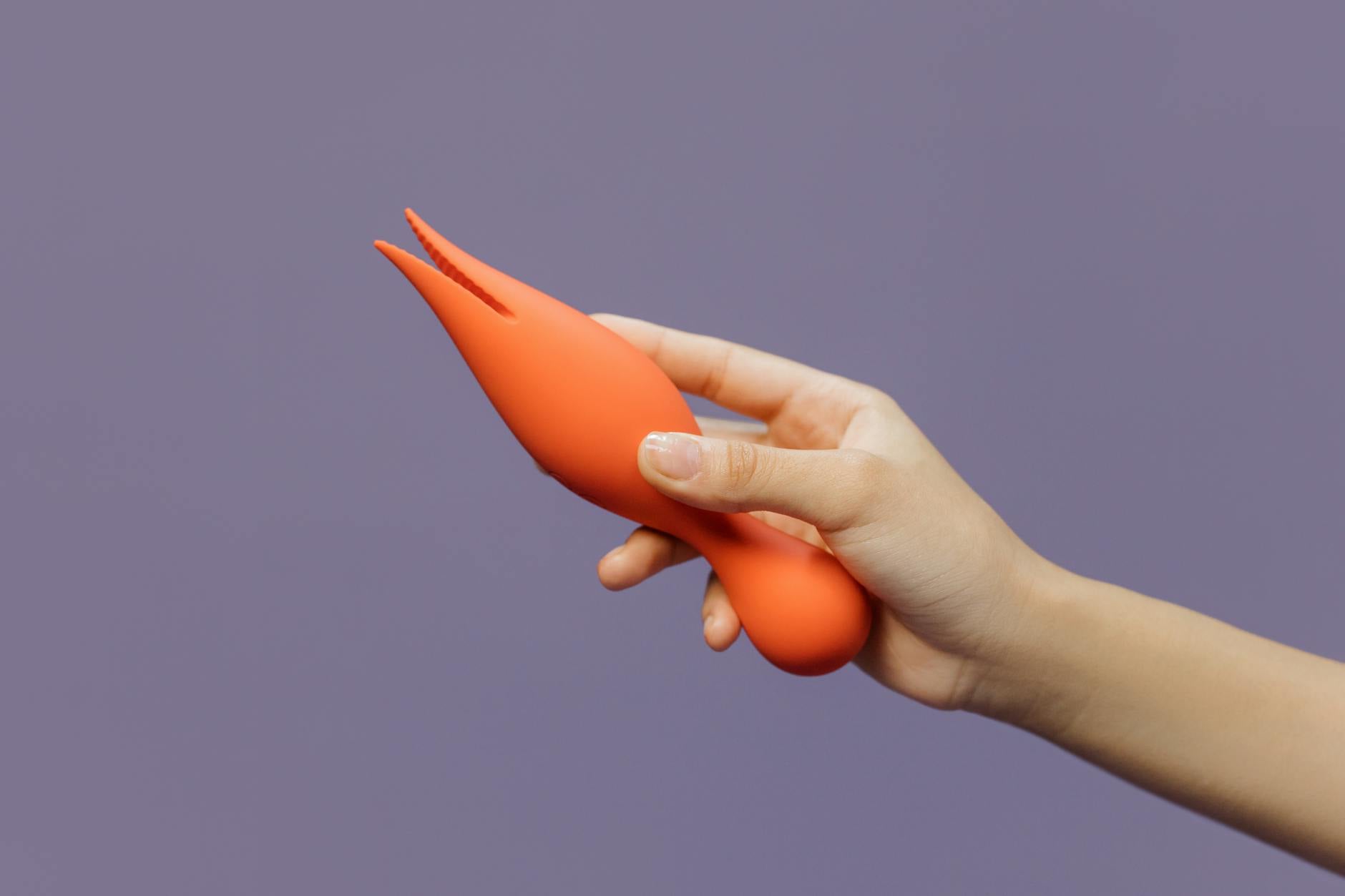
How Lemon Vibrators Work Better Than Traditional Vibrators for Sensitive Clits
Let's be real. Traditional vibrators buzz. Lemon vibrators suck. And that difference is not semantic. It's neurological.
If you've tried wands, bullets, or rabbits and found them either too intense or somehow not quite hitting the mark, the problem might not be your body. It might be the tool. Here's what the science actually says about why lemon clitoral vibrators work differently, and why that matters for anyone with a sensitive clit.
The nerve anatomy that explains everything
Your clitoris isn't just the visible button on the outside. It's a wishbone-shaped structure with roots that extend internally, surrounding the vagina and urethra. The visible glans (the head you feel on the outside) contains roughly 8,000 nerve endings, but the internal branches have their own dense clusters of nerve tissue.
Traditional vibrators stimulate the surface of the glans using high-frequency oscillation. Think of it like tapping. The nerves on the surface respond, but they're not the only pleasure-producing nerves involved.
Lemon sexual toys use gentle suction to create a pulling sensation. This reaches deeper into the clitoral structure. Instead of tapping the surface nerves, you're activating the entire internal network. For people with a sensitive clit, this is the difference between a surface scratch and a deeper, more diffused activation.
Why vibration can feel overwhelming
Wands vibrate between 5,000 and 12,000 times per minute, depending on the model. That's a lot of rapid-fire stimulation hitting the same small area. If you have high sensitivity, your nerves can actually become fatigued by that intensity. It's like someone tapping your arm repeatedly really fast. After a while, it stops feeling good and starts feeling annoying.
Lemon vibrators (the hello nancy lem vibrator included) typically operate at much lower oscillation speeds, usually 1,800 to 3,000 pulses per minute. Combined with the suction mechanism, that creates a rhythm rather than a buzz. Your nervous system can register and respond to rhythm without becoming overwhelmed.
That's also why some people report orgasms with lemon suckers feel different. The sensation is less intense in the moment, which gives your brain space to process pleasure instead of just enduring stimulation.
Suction versus vibration: the actual difference
Here's what happens when you use suction. The soft seal created around your clit creates a gentle negative pressure. This pulls blood into the tissue, increasing swelling and sensitivity. Meanwhile, the low-speed pulsing sends signals deeper into the nerve structure.
Compare that to a vibrator. It sends high-frequency signals into surface nerves only. The tissue doesn't experience the same blood engorgement. You get stimulation, but not the full physiological response that deeper activation creates.
For people whose clits are naturally sensitive or have become more sensitive due to injury, hormonal shifts, or overuse of traditional vibrators, this matters wildly. You're not forcing pleasure. You're inviting it.
The desensitization problem vibration creates
We should talk about this directly. Regular use of high-intensity vibrators can create a desensitization effect. Your nerves adapt to the constant buzz. What felt amazing six months ago now barely registers. You turn up the intensity. Nerves adapt again. You're chasing a high that your body is learning to ignore.
Lemon clitoral vibrators don't usually trigger that cycle in the same way. Because the sensation is different and less intense, your nervous system doesn't habituate to it as quickly. Many people who switch from wands to lemon suckers report that they regain sensitivity over time.
If you're already experiencing desensitization, the article on clitoral sensitivity changes goes deeper into recovery strategies.
Pressure matters more than you think
Wands work by applying direct pressure to the clit while vibrating. That direct pressure is necessary for the vibration to transmit into nerve tissue. If you don't press hard enough, nothing happens.
Lemon sexual toys need almost no pressure. In fact, pressing too hard defeats the purpose. The seal around the clit is what matters. You can achieve full stimulation with your hand resting gently on your body, which means you can sustain pleasure without arm fatigue or the strain of pressing a vibrator against yourself for 15 minutes.
That might sound trivial until you realize how much mental space and physical effort you've been dedicating to "pressing hard enough." Remove that friction, and pleasure becomes more accessible.
Why clitoral vibrators marketed as gentle still miss the mark
The market has caught on that people want gentler options. So wand manufacturers started making versions that vibrate at lower speeds. But they're still vibrating. They're still applying direct pressure to the surface of your clit. They're still not reaching deeper nerve tissue the way suction does.
Lowest-speed wand plus any vibration will never feel like a lemon sucker. The mechanism is fundamentally different. If you've tried a "gentler" wand and still felt like something was missing, you weren't wrong. You were experiencing the limitation of the technology.
Lemon vibrators solve that by replacing the mechanism entirely.
The warm-up time difference
Traditional vibrators can jump straight into stimulation. Your clit doesn't need much activation first.
Lemon sexual toys work better if you give yourself 30 seconds to a minute of gentle suction without any pulsing. Let your tissue respond to the pressure. Once you feel the engorgement and increased sensitivity, then start the patterns.
This isn't a limitation. It's actually helpful. That built-in pause creates a natural warm-up rhythm. Your nervous system gets time to register what's happening. You arrive at pleasure more deliberately.
Partners and lemon clitoral vibrators
If you use a lemon vibrator with a partner, the lower noise level and gentler sensation opens up possibilities that intense wands don't. You can incorporate it during partnered sex without the intensity interrupting penetration or the noise breaking the intimacy. The article on using lemon vibrators with partners covers the mechanics of that conversation.
When you might still prefer a wand
This isn't a "wands are bad" argument. Some people genuinely prefer the intensity and directness of a traditional vibrator. If you're someone who needs strong, concentrated stimulation to orgasm, and you're not experiencing desensitization or sensitivity pain, a wand might be perfect for you.
The point is that if you've felt alienated by traditional vibrators, you're not broken. The tool might just be a poor fit for your neurology. Lemon suckers exist because suction stimulates pleasure in a way vibration simply cannot.
The consistency factor
One thing people notice quickly with lemon vibrators is consistency. The seal maintains pressure evenly. There's no variation based on angle or pressure, the way there is with wands. That consistency means you can relax into the sensation instead of constantly micro-adjusting your position.
That seems small. It's actually huge. Half your mental energy during vibrator use goes to "Am I at the right angle? Am I pressing hard enough?" With a lemon clitoral vibrator, those questions answer themselves. You can focus entirely on sensation and arousal.
What this means for your pleasure
If you've been using traditional vibrators and wondering if there's something better out there, lemon sexual toys are genuinely different. Not just a variation on the same theme. A different technology, reaching different nerves, creating a different sensation.
That's why people switch and don't go back. You're not choosing based on marketing or novelty. You're responding to a tool that actually works with your body instead of against it.
People also ask
Do lemon vibrators actually feel better than regular vibrators?
Better is subjective, but different is objective. Lemon vibrators use suction instead of vibration, which activates deeper nerve clusters. For people with sensitive clits or those who've experienced desensitization from wands, they often feel markedly better. People who prefer intense, direct stimulation might find them too gentle. The answer depends on your body and what you've responded to in the past.
Can I use a lemon sucker if I've never used any vibrator before?
Absolutely. In fact, starting with a lemon clitoral vibrator might be ideal if you have a naturally sensitive clit. You're not conditioning your nerves to need high-intensity vibration before you even know what you prefer. The gentle suction of a lemon vibrator lets you explore sensitivity at a baseline level. Once you understand your responses, you can explore other options if you want to.
Why do lemon vibrators have different power settings?
The power settings control the intensity of the pulsing, not the suction itself. Lower settings create gentler, slower pulses. Higher settings increase frequency. For people new to lemon sexual toys, starting at setting 1 or 2 is recommended. You can increase intensity as your body becomes familiar with the sensation and your arousal level rises.
Do lemon clitoral vibrators work if you use them with lubricant?
Yes, but the mechanism works slightly differently. With lubricant, the suction seal is less tight, so the pressure sensation is reduced. The pulsing still registers, but the pulling sensation decreases. Some people like this. Others prefer using lemon vibrators without lubricant for the full suction experience. It's worth trying both.
Can vibrator sensitivity be reversed?
Often, yes. If you've become desensitized to traditional vibrators through regular use, switching to a lemon sucker and giving yourself a break from high-intensity vibration can restore sensitivity over weeks or months. The speed of recovery varies, but many people report noticeable improvement within 4 to 6 weeks of consistent use of lower-intensity tools.
What's the difference between a lemon vibrator and a regular clitoral suction toy?
Not all suction toys are the same. Some create very strong suction designed for extreme sensation. Lemon vibrators, especially hello nancy's lem vibrator, are engineered for comfort and sustained pleasure. The suction is gentler, the pulsing is slower, and the seal is designed to be comfortable to use for extended periods. If you tried a high-intensity suction toy and found it too strong, a purpose-built lemon vibrator will feel entirely different.
The bottom line
Your clitoris responds to different types of stimulation in different ways. Vibration is one option. Suction is another. Knowing the difference means you can choose the tool that actually works for you, not the one marketing has convinced you to try.
Lemon vibrators exist because pleasure is personal. If traditional vibrators have left you cold or overstimulated, that's not a reflection on your body. It's a reflection on the match between your neurology and the available tools. A lemon clitoral vibrator might be the shift you've been looking for.