Let's start with what nobody tells you
Your body isn't built for consistent pleasure. That's not a problem. It's biology, and once you understand it, it becomes an advantage.
Hormone levels shift across your cycle, and those shifts change how your clitoris responds to touch, how quickly you build arousal, and what intensity actually feels good. Most people either ignore this entirely or think it means something's broken. Neither is true. It just means that using your lemon vibrator the same way every single day is like wearing the same shoes to a hike and to the beach. You'd adjust for the terrain. Your pleasure deserves the same logic.
Week one: the follicular phase (building energy)
Your period has just ended or is ending. Estrogen is climbing, and your body is gearing up. This is often when people feel a noticeable energy shift. More motivation, more interest in connection, sometimes more interest in solo time too.
In this phase, your clitoris tends to be less sensitive than it will be mid-cycle, but it's also more patient. Arousal takes time, but that time feels good. Your tissues are still adjusting post-menstruation, so if you bleed heavily, you might feel a bit tender. That's normal and temporary.
With a lemon vibrator during this week, start with the lower intensity settings. Your clitoris wants to be coaxed, not grabbed. Think of this as foreplay week. Spend 15-20 minutes with patterns 1-3 before moving higher. The suction rhythm of a lemon clitoral vibrator works particularly well now because it's less abrasive than direct vibration. You're building pleasure gradually, which is exactly what your hormonally shifting body wants.
If you menstruate heavily: consider waiting until the flow lightens or using internal barriers if that's your preference. The lemon sucker design is external, so it's entirely up to you. Many people feel more aroused post-bleeding anyway.
Week two: the ovulation window (peak sensitivity)
Estrogen is at its highest, testosterone rises temporarily, and your clitoris is most swollen, most sensitive, and most ready. This is typically days 10-16 of your cycle (though every body varies wildly). If you track your cycle at all, you already know this week feels different.
Your clitoris is larger and more engorged in this phase. Blood flow increases. That means sensation is heightened. Your lemon vibrator might feel more intense than it did last week, even on the same setting. This is your cue to pay attention to what actually feels good rather than defaulting to "more intensity equals better."
Many people find mid-cycle is when they can handle moving to pattern 4-5 on their lemon vibrator. Some discover they actually prefer staying in the mid-range because intensity this high can become overwhelming. There's no "right" here. Listen to your body.
This is also often when you have the most desire for longer sessions. Your baseline arousal is higher, so you're less reliant on warm-up time. You might find yourself reaching for your lemon clitoral vibrator spontaneously, not just as a planned thing. That's the hormones talking, and it's completely normal.
One note: if you use hormonal birth control, this "peak" is often muted or moved. That's not bad. It just means you might need to track what actually feels different rather than relying on textbook cycle timing.
Week three: the luteal phase begins (slowing down)
After ovulation, progesterone starts climbing. Estrogen drops. Your body is shifting gears. You might notice you feel a little quieter. More introspective. Less interested in intense external stimulation and more interested in depth or slowness. That's not depression or loss of libido. That's a different hormonal state.
Your clitoris is still sensitive, but it's a different kind of sensitivity. Less "grab my attention" and more "give me something I can sink into." This is when the nuanced patterns on a lemon vibrator become your best friend. Instead of jumping to high intensity, try the pulsing patterns or the longer, slower waves. You're not chasing the same peak you had last week. You're exploring a different kind of pleasure.
If you felt tender or overstimulated at mid-cycle, week three often brings relief. Your body wants gentleness. Progesterone also tends to lower mood slightly, so extending your session and being deliberate about comfort (good lube, relaxed shoulders, no time pressure) matters more this week.
Many people skip pleasure practice in this phase because they assume lower desire means they won't enjoy it. Then they actually try it and discover some of their best orgasms happen here. The intensity is different, not absent.
Week four: the late luteal phase (the adjustment)
Progesterone is high, estrogen is dropping, and your body is preparing to menstruate. This is often when people feel most tender, most sensitive, most irritable. PMS isn't a myth. It's real hormonal chemistry, and it affects sensitivity.
Your clitoris might feel sore or oversensitive in this phase. That doesn't mean no pleasure. It means lighter touch. Lower intensity. Longer warm-up time because arousal might feel sluggish even though you logically want sex. Hormones and logic are two different systems, and in week four, logic often loses.
If you use your lemon vibrator this week, stay in patterns 1-2. Consider using more lube than usual. Your tissues might feel less naturally lubricated because estrogen is dropping, and adding external lubrication changes everything. A water-based lube designed for sensitivity works beautifully. The suction style of a lemon clitoral vibrator is gentler on tender tissue than traditional vibration anyway, so you're already working with a more forgiving tool.
If pleasure doesn't appeal this week: that's also completely valid. Hormones are telling your body to rest and prepare. Listen to that sometimes.
The tracking piece (how to actually know what week you're in)
If your cycle is regular, standard math is day-1-is-first-day-of-bleeding. If your cycle is irregular, uses hormonal birth control, or you've never tracked before, the easiest starting point is just noticing. When do you feel most interested in solo time? When do you feel most sensitive? When does your body feel tired?
You don't need an app or obsessive tracking. Just mental notes. "Oh, I reached for my lemon vibrator three times this week and it felt amazing" or "Everything felt too intense, I backed off." That's data. After two cycles, patterns usually emerge.
If you use hormonal contraceptives, your cycle is being suppressed or altered. You might not have these four phases. Some people on hormonal birth control feel completely stable throughout the month. Others notice micro-fluctuations even on the pill. Neither is wrong. Just different information to work with.
Building a rhythm instead of a rut
The whole point of understanding how hormones shift your pleasure is freedom. You're not working against your body. You're not forcing the same technique every single day and wondering why Tuesday doesn't feel like Saturday.
Think of your lemon vibrator as a tool with multiple settings, and your cycle as information about which settings serve you best each week. Some people find this unlocks pleasure they didn't know was possible because they stop fighting their own biology and start dancing with it.
If you're navigating pleasure after stopping birth control, this framework becomes even more useful because you're rebuilding awareness of your cycle as it comes back online.
The other part of this: pleasure isn't about performance or consistency. Week two doesn't need to be "better" than week three. Different is the whole point. Your clitoral vibrator is here to meet you wherever you are in your cycle, not to hit the same mark every time.
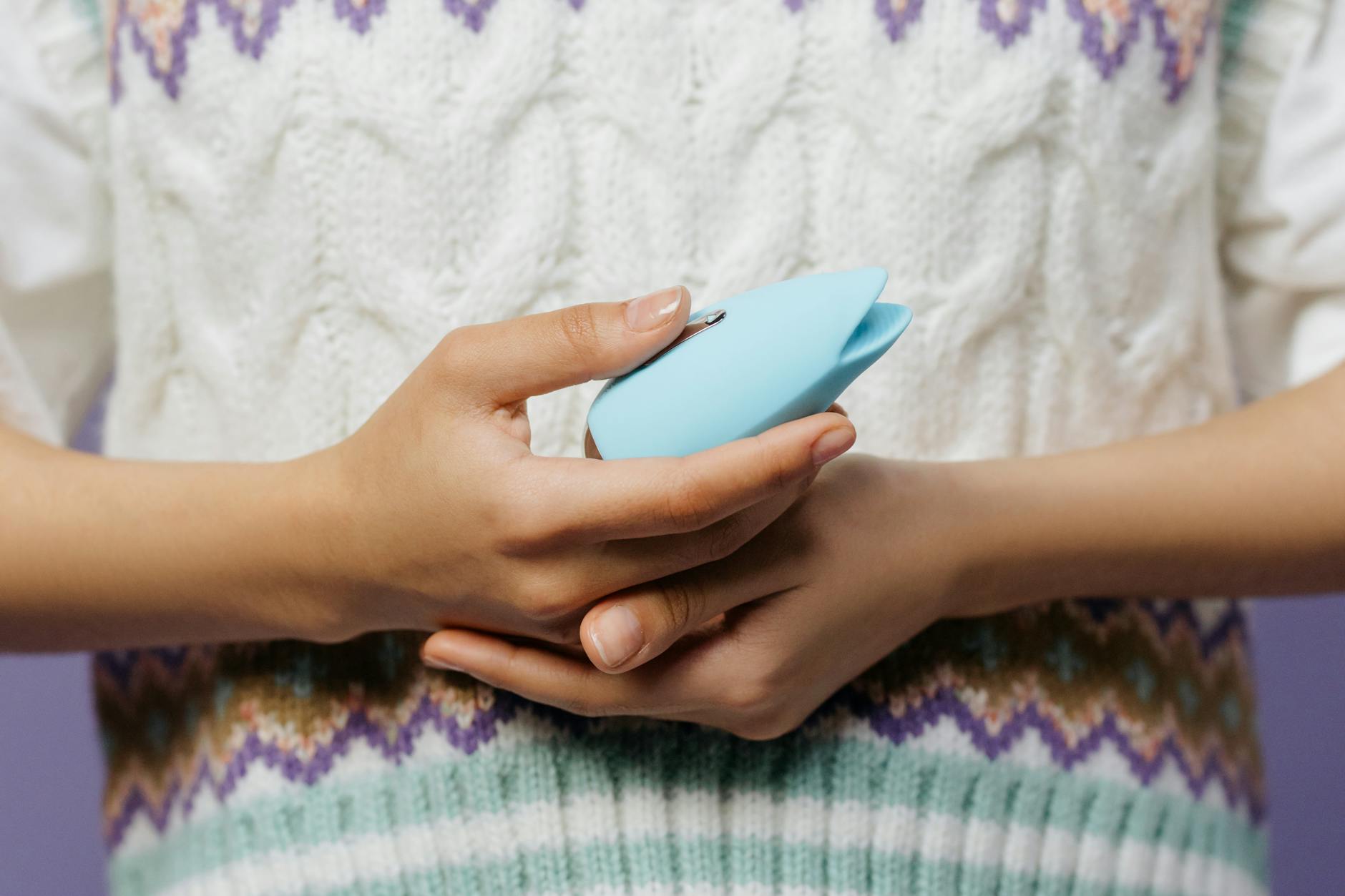
Photo by cottonbro studio on Pexels
When things don't follow the textbook pattern
Some bodies cycle regularly. Others cycle irregularly. Some are on medication that flattens hormonal fluctuations. Some have PCOS or endometriosis that changes how sensations land. Some are postpartum and haven't gotten their cycle back yet.
None of that means this framework is useless. It just means you're the expert on your own body. Instead of following a rigid four-week timeline, notice what's true for you. Do you feel rhythm changes at all? If yes, are they predictable? What pattern does that follow? A lemon sucker is responsive enough that even if your cycle is different from average, you can still adjust your approach based on what you actually feel.
If you're dealing with oversensitivity, these rhythm adjustments become an even more practical tool for keeping your toy usable year-round without pushing yourself into discomfort.
The lube variable (quietly the most important thing)
Lubrication changes across your cycle too. In week two, you're naturally wetter. By week four, you're often not. That single variable changes how a lemon vibrator feels in your hand and against your body.
Keep a good water-based lube on hand for weeks three and four specifically. It's not a sign of anything wrong. It's an adjustment to hormonal reality. And honestly? Even in your "wet" weeks, adding a tiny bit of lube often deepens sensation with a lemon clitoral vibrator because the glide becomes smoother and more sustained.
FAQ: Your cycle and pleasure questions answered
Can I use my lemon vibrator during my period?
Yes. Your clitoris exists during your period. Many people find pleasure during menstruation soothing or even helpful for cramps. The suction design of a lemon clitoral vibrator is external, so bleeding isn't a barrier. Start gently because hormones and tissue are shifting. If you use internal barriers or don't feel like it, that's equally valid. No pressure either direction.
Does hormonal birth control change how my lemon vibrator feels?
Often yes. Hormonal contraceptives suppress natural cycle fluctuations. You might notice your clitoris feels stable throughout the month rather than cycling through sensitivity phases. This is normal. You might discover you actually prefer a consistent sensation level, or you might find you miss the rhythm. Both are reasonable responses.
Why does my lemon sucker feel intense some weeks and gentle other weeks?
Your clitoris is changing size and blood flow across your cycle. That changes sensitivity independent of what your vibrator is doing. Week two, your clitoris is larger and more engorged, so even a lower setting might feel more intense. Week four, your tissues are tender and more delicate, so the same setting might feel too strong. This is biology, not a problem with the toy.
Can I predict exactly when I'll feel most pleasure?
Not precisely, but you can build a reasonable map. Most people feel peak sensitivity around ovulation, mid-cycle pleasure around 10-16 days after the first day of their period. But "most people" isn't everyone. Track what you notice, and that becomes your personal data. After two to three cycles, patterns usually emerge.
What if my cycle is irregular? How do I use these tips?
Notice your own patterns rather than following the calendar. When do you feel energetic? When do you feel introspective? When does your body feel tender? Those feelings often correlate with hormonal shifts even if your cycle isn't perfectly regular. Your lemon vibrator can still adjust. Just use your body's signals instead of dates.
Does PCOS or endometriosis change how I should use my lemon vibrator?
Possibly. Both conditions change hormone levels and tissue sensitivity. The general principle still applies: pay attention to what feels good, adjust intensity accordingly, use lube when needed. But the specific week-by-week pattern might not match the standard cycle. Your body is the guide. If you're experiencing limited sensation, these monthly fluctuations might be even more pronounced in certain weeks.
The bigger picture
Understanding how your cycle shapes pleasure isn't about becoming obsessed with tracking. It's about permission. Permission to adjust. Permission to notice that Tuesday doesn't need to feel like Saturday. Permission to work with your body instead of demanding it feel the same way constantly.
Your lemon vibrator is a tool designed to adapt. Your cycle is information about what adaptation serves you best. Put them together and you're not fighting biology anymore. You're using it.
If you're curious about how other physical or emotional factors shape your pleasure experience, reach out. Every body is different, and that's where the real pleasure lives.