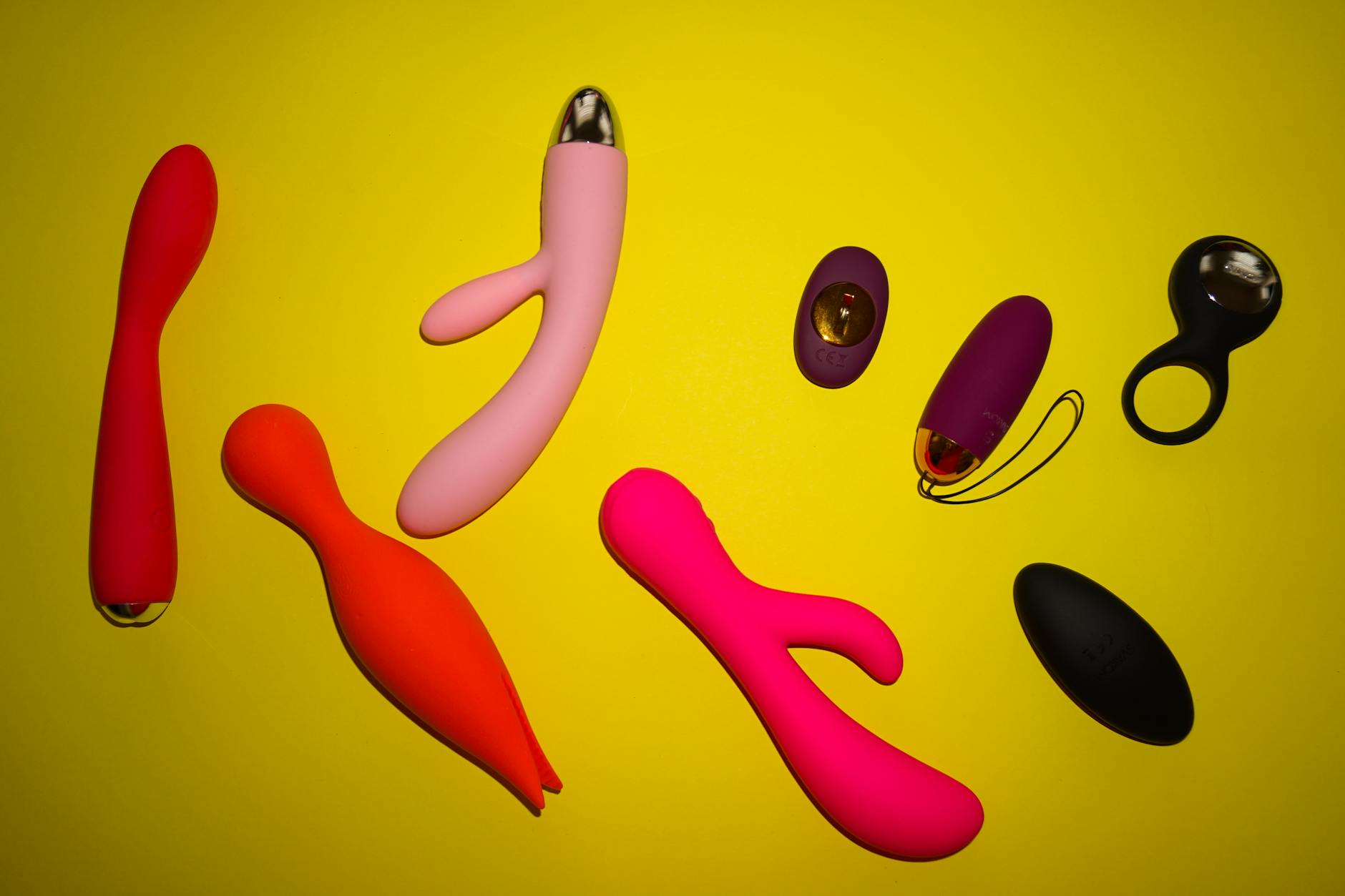
Let's talk about what actually changes
Your thirties aren't your twenties. That's not a loss statement. It's a map update. The body you have now responds differently to touch, builds arousal on a different timeline, and honestly often has clearer ideas about what it actually wants. Most of what I hear in my practice about pleasure shifting in the thirties is framed as a problem. It's not. It's information.
Around thirty, a few things start to move. Hormonal cycles often stabilise into a clearer pattern (if you menstruate), meaning you can actually predict when sensation will be sharper and when it might dull slightly. Nerve sensitivity doesn't decline, but the tissue around the clitoris can feel less responsive to very light touch. Arousal doesn't disappear. It just stops being automatic. You need more psychological engagement, more focused attention, sometimes more time.
None of this means orgasms are harder to reach. It means the path has changed. And once you understand the new path, many people report that their thirties mark the beginning of their actual best pleasure, not the end of it.
Why your clitoris feels different now
This is worth understanding at the physiological level because it changes everything about how you'd use a clitoral vibrator like the Lemon in your thirties.
Your clitoris has about 8,000 nerve endings. That hasn't changed since you were twenty. What has changed is the surrounding tissue. Collagen production starts to shift subtly. The vulvar skin becomes slightly less plump with natural hydration. For most people this is invisible. For pleasure, it changes what kind of stimulation works best.
Light, feathery touch that might have driven you wild at twenty-five can feel almost uncomfortable now, like trying to find a radio signal that's just slightly out of range. Direct, sustained pressure often feels better. Suction (which is how clitoral vibrators with an air-pulse mechanism work) bypasses this problem entirely because it's stimulating the nerve cluster without requiring the tissue to be ultra-responsive to surface-level touch.
This is also why your thirties are often when people discover they actually prefer vibrators. Not because something's wrong. Because the tool matches the body's actual preferences now.
The arousal timeline shift (and how to work with it)
In your twenties, arousal can feel almost involuntary. You're exposed to the right stimulus and something just... switches on.
In your thirties, arousal is still accessible. It just usually requires you to be more actively involved in the process. Your nervous system needs you to be present. Your mind needs to be actually engaged, not just passively receiving sensation.
This is actually a superpower, not a limitation. It means:
- You know what you want and don't want
- You're less likely to do things because you think you should
- You can build pleasure intentionally instead of waiting for it to happen
When using a lemon vibrator in your thirties, this means building in transition time. Spend five to ten minutes on non-genital touch first. Breath work. Self-touch on your body. Maybe use the vibrator on lower intensity for two to three minutes on the inner thighs or mons pubis before moving to direct clitoral stimulation. You're not warming up because something's broken. You're warming up because that's how your nervous system works now, and working with it gets you better results.
Pattern and intensity: your new sweet spot
The Lemon vibrator has multiple intensity levels and patterns. In your twenties, people often jump straight to the highest setting. In your thirties, the data shifts.
Most users in their thirties report that patterns three through five (mid-range intensity) hit differently than top-speed settings. A pulsing or undulating pattern often creates more sustained pleasure than a flat, constant buzz. Climax often comes from building sensation through a pattern, rather than starting at maximum intensity and holding it.
One strategy I recommend to clients in this age group: start at intensity level two or three with a pulsing pattern. Stay there for three to five minutes. Then move up one level. This creates a natural building arc rather than a plateau. Many people find their orgasms are longer, more complex, and involve more of the pelvic floor when they build through patterns instead of jumping to raw power.
Mental landscape: desire and distraction in your thirties
Here's what nobody tells you about your thirties and pleasure. You're also managing career pressure, potentially relationship changes, friendships evolving, possibly aging parents, maybe financial decisions. Your brain is full. That matters for how you experience pleasure.
Full brain can actually be a feature of using a vibrator in your thirties. When you're using a lemon vibrator with intention, you're creating a small pocket of time where all you're doing is paying attention to sensation. Your nervous system is forced to downregulate for a bit. That attention is both the tool for pleasure and a form of self-care.
But it also means distractions hit harder now. If your partner is in another room and might come home early, if you're listening for kids or pets, if you're thinking about the email you forgot to send. Your thirties brain is busier.
The solution isn't shame about needing focus. It's creating the actual conditions for focus. Lock the door. Put your phone on silent. Ten minutes. That's the baseline. With that foundation, a clitoral vibrator becomes not just a tool for orgasm but an anchor for attention.
Partnered pleasure in your thirties shifts too
Many people in relationships report that their thirties bring a new openness to toys. You've stopped being embarrassed. You know more about what actually feels good. You're less worried about what your partner thinks and more interested in what actually works.
If you're using a lemon vibrator with a partner in your thirties, the dynamics are often different than they would be earlier. You might use it during sex because you know it gets you there faster and more reliably. You might use it solo during partnered time because your arousal timeline and their arousal timeline no longer need to match. You might use it because after years of sex, both of you are genuinely interested in what produces the most pleasure, not what's conventional.
The conversation becomes easier too. "I want to use this during" is usually less loaded now than it was ten years ago. Most people in their thirties are past the defensiveness. They just want sex that actually works.
Solo pleasure and why your thirties matter
This is worth its own section because solo pleasure often changes most dramatically in your thirties.
In your twenties, masturbation is often about speed and release. In your thirties, it can become about actual sensation and exploration. You know your body better. You know what takes you to different places. You might have a fantasy life that's evolved. You might have different goals on different days.
A clitoral vibrator in your thirties becomes less of a novelty and more of an extension of how you actually experience pleasure. Some days you want the speed. Some days you want the patterns. Some days you want to build slowly. Having a tool that supports all of these is how your thirties become genuinely your best pleasure decade.
The practical setup for your body now
When using a lemon clitoral vibrator in your thirties, these are the non-negotiables I see in my practice:
Lubrication matters more now. Water-based lube becomes genuinely useful because the tissue is slightly less naturally hydrated. This isn't about aging. It's just what hydration naturally does. A small amount of lube means the vibrator makes better contact and sensation is clearer, not muffled.
Battery life becomes real. In your twenties you might need a vibrator for five minutes. In your thirties, with the build-through-intensity approach, you're often using one for ten to fifteen minutes. Make sure it's fully charged. Nothing breaks the mood like vibrator dying mid-session.
Clean it properly between uses. Your thirties usually means you're a bit older, potentially wiser about hygiene. A quick rinse with warm water and soap between sessions keeps everything working correctly and prevents any irritation.
Positioning matters. In your thirties, you might have preferences now that you didn't at twenty. Some people like a vibrator while lying down. Some prefer sitting or on their knees. Your body knows. Listen to what feels best.
People also ask
Do I need to use a vibrator if I could orgasm fine before?
No. If you're having orgasms and they feel good, keep doing what you're doing. That said, many people in their thirties discover that a vibrator doesn't add pressure to orgasm. It adds dimension. Different sensations, different intensity levels, different ways of building pleasure. The choice is always yours.
Will using a vibrator make my body need it?
Not in the way this worry usually frames it. Your body doesn't become dependent on vibrators any more than your legs become dependent on bikes because you ride them. You can orgasm without a vibrator at any age. Using one sometimes just means you have another option. Many people use vibrators sometimes and nothing else other times.
What if I'm in a relationship and my partner isn't sure about toys?
Start by talking about what you actually want, not about the toy. "I want longer lasting pleasure" or "I want to orgasm more reliably during our time together." Then, if a vibrator seems like the tool that helps, introduce it that way. Frame it as something for you both, not something you're asking permission for. How to Use a Lemon Vibrator With Your Partner When You're Both Nervous About Toys walks through that conversation in more detail.
Is there a "right" way to use a clitoral vibrator in your thirties?
The right way is whatever produces pleasure for you. Some people use it for five minutes solo. Some use it during partnered sex. Some use it as foreplay. Some use it as the main event. Your thirties are when most people stop caring about what's "supposed" to happen and just do what actually works. That's the shift.
Will my sensitivity change again after my thirties?
Yes, probably. Each decade brings shifts. Forties bring their own changes. Fifties too. The good news is that by your thirties, you understand how your body works. You know what to ask for. You know what tools help. That knowledge carries forward. How to Use a Lemon Vibrator When You Want Clitoral Stimulation Without Direct Pressure has more on adapting to changing sensation over time.
Can I use a lemon vibrator if I'm on hormonal birth control?
Absolutely. Hormonal birth control can affect arousal and sensation for some people, but it doesn't prevent vibrator use or orgasm. If you're noticing that birth control has changed your pleasure, How Lemon Vibrators Ease Into Pleasure After Stopping Birth Control has strategies for that specific situation.
Your thirties are the beginning
Your thirties are often when pleasure stops being accidental and starts being intentional. Your body asks for different things. Your mind has clearer boundaries. Your desires feel more legitimate. That's not a decline. That's an upgrade.
A lemon clitoral vibrator works because it meets your body where it actually is now, not where it was before. It's a tool that speaks the language your body speaks in your thirties. Using one well means understanding what's shifted, working with those shifts instead of against them, and building pleasure that actually matches your life and your body right now.
If you want to talk through what might work best for your specific situation, contact us. We're here to help.