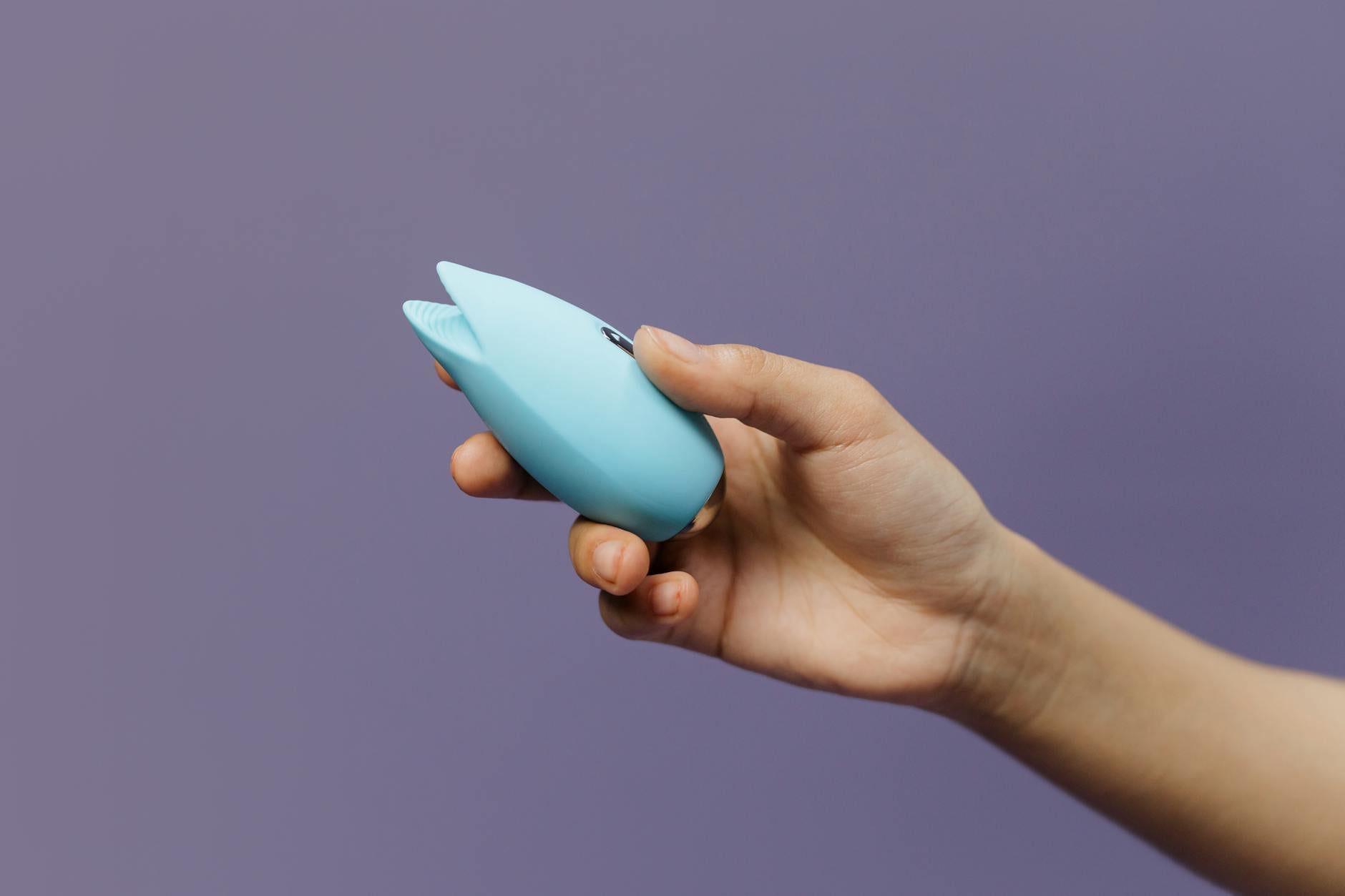
Let's talk about what your body is doing
Honestly, if you've noticed that your lemon vibrator feels wildly different on certain days of your cycle, you're not imagining it. Your clitoris genuinely becomes more or less responsive depending on where you are in your hormonal month. This isn't mystical. It's measurable, predictable, and absolutely worth understanding because it changes how you approach pleasure.
Most people with cycles never learn this. They assume their body is inconsistent or broken. Instead, your body is doing exactly what it's designed to do. The question is whether you work with it or against it.
How your cycle changes clitoral blood flow
Your clitoris is sensitive tissue packed with nerve endings and blood vessels. When estrogen rises, which happens in the follicular phase (roughly day 1 to day 14 of your cycle), blood flow to your genitals increases. More blood means more engorgement, which means the clitoral glans becomes plumper and more responsive to touch.
During this phase, sensations intensify. That suction from a lemon vibrator feels sharper, more pleasurable, easier to feel. Your body is primed for arousal. This is partly why the follicular phase is often called the "high-energy" window.
Then ovulation happens. For about 24 hours around day 14, hormones spike dramatically. Sensitivity cranks up even further. Some people experience their strongest orgasms during this window.
After ovulation, the luteal phase begins (roughly day 15 to day 28). Estrogen dips again, progesterone rises, and blood flow to the genitals gradually decreases. The clitoris becomes less engorged. Stimulation that felt incredible a week earlier now feels muted or even too intense in a different way. Some users need to go up in intensity settings. Others need to go down because the tissue is more tender.
Why your sensitivity shifts (it's not random)
Beyond blood flow, progesterone affects how your nervous system responds to stimulation. Higher progesterone can make you feel less "turned on" in a psychological sense, but it also changes the texture of arousal. Some people describe the luteal phase as producing deeper, more diffuse pleasure instead of the sharp, focused sensations of the follicular phase.
Progestin also increases skin sensitivity and can lower your pain threshold slightly. This matters if you're using a lemon vibrator at higher settings. What felt perfect on day 10 might feel almost painful on day 24.
Vasocongestion (blood pooling in the genitals) is another huge factor. During the follicular phase, the vaginal tissue becomes more lubricated and the clitoris engorges more completely. This physical change means suction stimulation works more efficiently. The tissue has more surface area and more sensitivity.
In the luteal phase, less vasocongestion means the clitoral glans is smaller and less engorged. Stimulation requires more effort to feel the same intensity. Or, alternatively, the same setting that was comfortable now feels too strong because the smaller tissue is being stimulated more directly.
The practical adjustment you can make
If you use a lemon clitoral vibrator like the Lem, you've likely noticed the settings dial makes a difference. During your follicular phase and ovulation window, you might prefer settings 1 through 3. The lower suction is enough because your tissue is already primed.
During the luteal phase, you might need to shift to settings 4 or 5 to achieve the same sensation, or you might prefer to stay lower but take longer with warm-up. Some people find that adding extra lubricant (water-based, always) during the luteal phase helps compensate for the decrease in natural lubrication.
The key is not to assume something is wrong. Your body hasn't stopped working. It's just operating at a different baseline.
When sensitivity becomes discomfort
For some people, especially those with endometriosis, adenomyosis, or pelvic floor dysfunction, the luteal phase can involve genuine pain or extreme sensitivity. If your lemon vibrator triggers cramping or sharp pain during certain cycle days, that's worth investigating with a pelvic health specialist. You're not being too sensitive. That pain is information.
For others, the follicular phase is the tender window. Everyone's cycle is slightly different. The solution isn't to avoid pleasure during tough phases. It's to adjust intensity, duration, and technique.
Track your patterns (seriously)
I recommend keeping a simple log for two or three cycles. Note the day of your cycle, which pattern or intensity setting you used on your lemon vibrator, and how it felt. After a few months, you'll see your own pattern emerge. Maybe you prefer suction intensity 2 from days 1-6, intensity 3 from days 7-14, intensity 4 around ovulation, then back to intensity 2 from day 16 onwards.
Or maybe your pattern is completely different. The point is, you'll know. And once you know, you can plan ahead. If you know day 23 is always tender, you're not going to push intensity that day. You're going to take your time, use more lube, and maybe spend longer in warm-up.
Tracking also helps if you're working with a partner. You can communicate your needs clearly instead of leaving them guessing why something feels different.
Hormonal birth control changes everything
If you're on hormonal contraception, your cycle is artificially flattened. Hormones don't fluctuate as wildly, so sensitivity stays more consistent month to month. For some people, this is a relief. For others, it removes the natural arousal peaks that make pleasure feel effortless during the follicular phase.
If you've recently started or changed birth control, give yourself a few months before deciding whether your pleasure has genuinely changed. Your body adapts, and so does your relationship with sensation.
The mental piece matters as much as the physical
Your cycle also affects mood, energy, and mental arousal, not just physical sensation. During the follicular phase, dopamine rises. You feel more confident, outgoing, and sexually motivated. During the luteal phase, serotonin shifts and you might feel more introspective, lower-energy, or less interested in sex.
This isn't a malfunction. It's variation. Your body naturally wants different things at different times. Fighting that is exhausting. Working with it is freeing.
Some people find that during the luteal phase, they don't want external stimulation at all. They want slow, internal pressure instead. If that's you, a lemon vibrator might not be your tool for those days. And that's fine. You can rotate tools based on what your body actually wants.
When to get help
If your cycle-related sensitivity swings are extreme (pain during some phases, numbness during others), or if you notice they're getting worse, talk to a gynaecologist or pelvic floor specialist. Conditions like endometriosis, hormonal imbalances, or pelvic floor dysfunction all change sensation in predictable ways that are very treatable.
You're also not broken if pleasure feels harder during certain phases. Your body isn't a machine. It's a complex system responding to chemical signals. Understanding those signals is the first step to working with your body instead of against it.
The takeaway
Your clitoris gets more or less responsive throughout your cycle. This affects how a lemon vibrator feels. Recognizing this pattern isn't overthinking pleasure. It's respecting what your body is actually telling you. The follicular phase is often your opportunity to explore higher intensities and longer sessions. The luteal phase might call for gentler stimulation, more lubrication, and longer warm-up.
None of these adjustments mean you're doing something wrong. They mean you're paying attention. And attention to your own pleasure is the most powerful tool you have.
FAQ
Why does my clitoris feel numb during my period?
During menstruation, estrogen is at its lowest point. The clitoris is less engorged and blood flow is focused elsewhere in your body. You're also dealing with uterine contractions and hormonal shifts that make external stimulation less appealing or feel less effective. This usually resolves within a few days as estrogen begins to rise again. If numbness lasts well beyond your period, mention it to a doctor.
Can I use my lemon vibrator at the same intensity throughout my cycle?
Technically yes, but you might find it's uncomfortable at certain phases. Most people discover they prefer adjusting intensity or duration based on cycle timing. Some stick with one setting and find that adding more time or more lubricant gets them where they need to go. It's entirely your choice. Experiment and see what feels right for your body.
Does ovulation always feel more intense?
For most people, yes, but not everyone. Ovulation involves a sharp surge in luteinizing hormone, which does make arousal feel more acute. That said, stress, sleep, relationship dynamics, and other factors also influence sensation. If ovulation doesn't feel noticeably different for you, that's normal too.
Will tracking my cycle actually change my pleasure?
Yes, because information changes behavior. Once you know that day 22 is always tender, you stop being surprised or frustrated by it. You adjust your approach. You might take longer with warm-up or use a different technique. That shift from "my body is weird" to "my body has a pattern I can work with" genuinely improves the experience.
What if my cycle is irregular?
If your periods are unpredictable or you're in perimenopause or menopause, the hormonal peaks and valleys might not follow a traditional pattern. You might still notice sensitivity shifts, just on a different timeline. Pay attention to patterns in how your body feels and responds, even if those patterns don't align with a typical 28-day cycle. How to Use a Lemon Vibrator After Menopause covers this in more depth.
Is there a "best" time in my cycle to use a lemon vibrator?
The best time is whenever you want pleasure. That said, if you're new to lemon vibrators and trying to find your comfort level, the late follicular phase (around day 10 to day 14) is often easier because your tissue is naturally more responsive. This is a great window to learn the different intensity settings and what your body enjoys. Once you know your baseline, you can explore how settings feel during other phases.
Your body isn't inconsistent. It's responsive. Understanding how your cycle influences sensation transforms how you approach pleasure. Whether you're using the Lem or exploring how lemon vibrators compare to wand vibrators, working with your natural rhythm instead of against it makes all the difference. If you're curious about how your body works and want personalized guidance, reach out and let's talk about what you're experiencing.