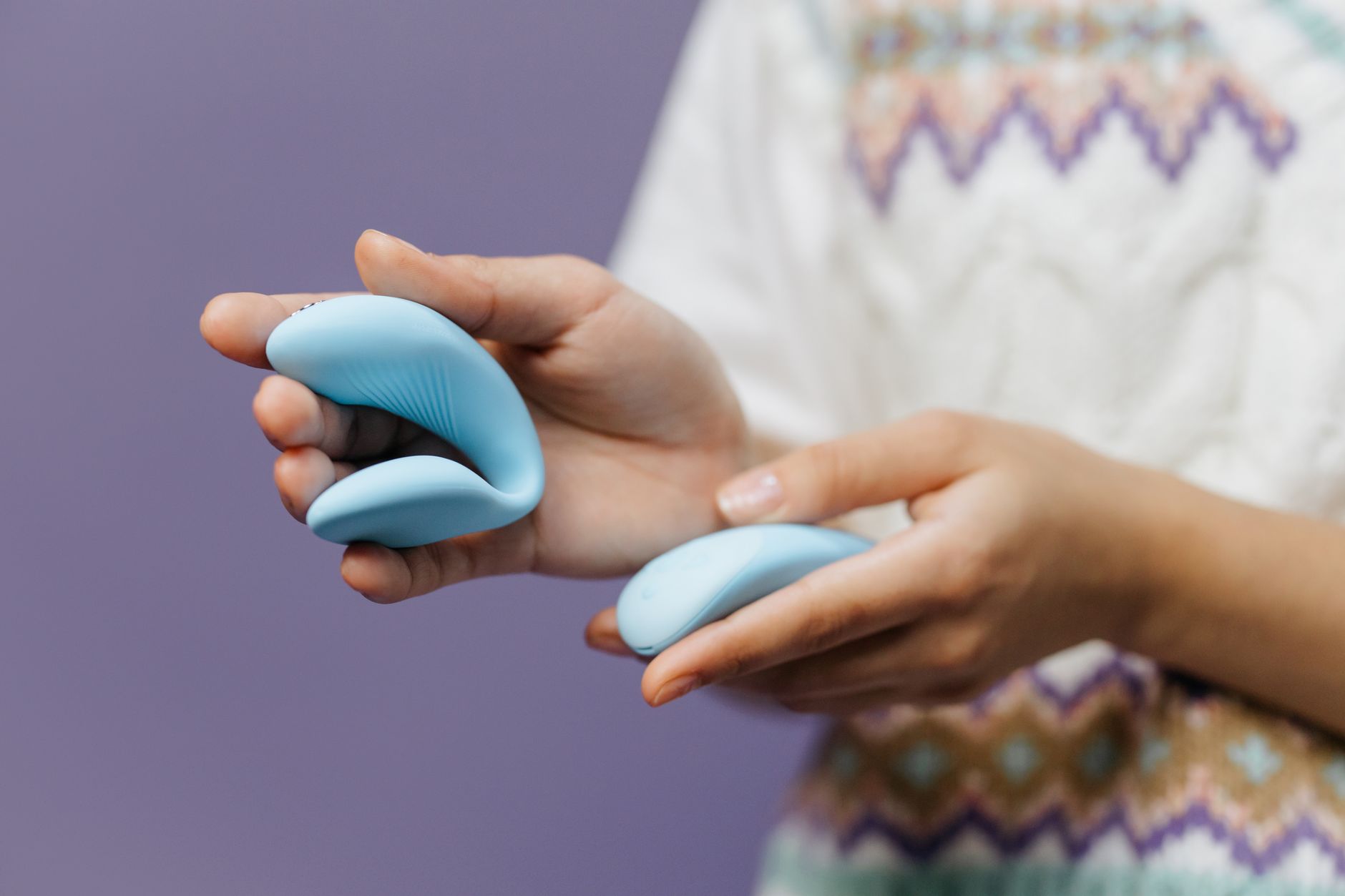
Let's start with the honest part
Your long-term partner is worried about one thing: that you want the toy more than you want them. That's the script running in the background. It's not rational. It's also completely understandable. After years of sex together, introducing a vibrator can feel like an edit to a story that already exists. And people get weird about edits to stories they think are finished.
The good news? A lemon vibrator isn't a threat to your relationship. It's an invitation to one. The trick is framing it that way from the start.
Why the conversation feels so loaded
Here's what's actually happening when you mention introducing a toy into your sex life. Your partner hears: "What we've been doing isn't enough." Even if you don't say that. Even if it's not true. The brain fills in blanks.
For someone in a long-term partnership, sex becomes linked to identity. Am I still desirable? Am I still enough? A vibrator can feel like evidence of a "no" to both. The anxiety is real, even if the threat isn't.
You have two jobs here. First, separate the vibrator from the relationship. Second, give your partner permission to feel weird about it before jumping into logistics.
The opening conversation
Don't lead with the toy. Lead with curiosity about what they're thinking.
"I've been thinking about trying something new in our sex life. Before I even tell you what, I want to know if you feel like anything's missing right now." This does two things. It signals that you're asking what they want, not imposing what you want. And it gives them a chance to voice fears before you've even mentioned anything specific.
Listen. Actually listen. If they say they're satisfied and don't want anything to change, you have information. It doesn't mean "no vibrator ever," but it means the conversation starts from a different place. They've told you they see sex as working. A toy feels like criticism.
If they say they'd like things to be different or feel like sex has gotten predictable, you've just been handed your opening.
Then: "I read about lemon vibrators. They're designed around clitoral pleasure. The idea isn't that you're not enough. It's that different kinds of stimulation can deepen things. I'm interested in exploring. Would you be open to trying it together?"
Notice what's missing: apology, defensiveness, reassurance that it's "just a toy." Just clear information about what the tool does and what you want to explore.
The fantasy versus the reality conversation
Many people in long-term relationships carry a fantasy of spontaneous sex that doesn't require props or discussion. A vibrator challenges that fantasy. Sex becomes a conversation instead of a thing that just happens.
Here's the reframe: conversations make better sex. Not worse sex. Better sex.
Tell your partner this. "Bringing this up means we're talking about sex intentionally. That's actually rare in long-term relationships. Most couples stop talking about it at all. I want to do the opposite with you." This signals that the vibrator isn't about running away from your sex life together. It's about deepening it.
Showing them it's not a replacement
Your partner needs to see, not just hear, that a lemon vibrator augments sex with them, not replaces it. Three concrete ways to demonstrate this.
Introduce it during partnered sex, not solo play first. This matters more than you think. If your partner's first encounter with the toy is you using it alone, the narrative in their head is: "She likes this more than me." If their first encounter is you using it with them, the narrative is: "We're exploring this together." Use the lemon clitoral vibrator while they're inside you, or while they're stimulating you manually, or while you're both just present and engaged. This isn't being coy. It's smart relationship architecture.
Ask them to be the one who turns it on. Hand them the toy and the controls. Let them set the pattern and intensity. This puts them in charge of the pleasure experience, not sidelined by it. You'd be surprised how much anxiety melts when someone gets to choose the pace and sensation.
Describe what you're feeling out loud. "Oh, that's different. Wow. That's more concentrated." "I like this pattern with your fingers too." This narration keeps your partner in the room psychologically. They're not watching from the outside. They're part of the sensation.
The vulnerability part
Here's something most guides won't tell you. Your partner might cry. Or get quiet. Or say it feels weird and they want to stop. That's normal. You're both crossing a boundary that existed in your sex life. Boundaries feel big when you cross them, even good boundaries.
Don't push past it. Pause. Ask what they're feeling. It might be shame. It might be excitement and they don't know what to do with that. It might be that the sensation is genuinely uncomfortable for them and they need a break.
Give them space to name it. "I know this is different. What's coming up for you right now?" Then listen more than you talk.
Building the habit
After the first time, don't assume you're done with the conversation. Bring it up again. "That felt good. I'd like to try it again. Would you?" Make it a choice, not an assumption. Over time, as your partner sees that the vibrator doesn't replace them and sex with it is genuinely better, the weirdness usually fades.
Honestly? Most long-term partners who were nervous beforehand end up enjoying the introduction of a lemon vibrator more than they expected. Because they realize two things simultaneously. First, their partner wants more pleasure, which means their partner wants more of their sex life. Second, they get to be part of giving that pleasure. That's connection.
When they say no
Sometimes your partner genuinely won't be on board. Not now, maybe not ever. Here's the thing: you get to want things that they don't. That's real. It doesn't mean you leave. It means you're honest about what you're willing to live with and what you're not.
If sex is a significant part of your relationship fulfillment and your partner refuses to engage with your pleasure in any form, that's real information about compatibility. If you're willing to compromise and not use toys, but you want to stay connected sexually, that's also real. There's no universal answer here. There's just your answer.
But most of the time, the resistance isn't about the vibrator. It's about fear. And fear shifts when you meet it with patience instead of defensiveness.
Your partner is worried about one thing: that you want the toy more than you want them. Separate those two ideas early, and everything else becomes easier.
The long-term play
Once the vibrator becomes a regular part of your sex life, something interesting often happens. Your partner stops thinking of it as "your thing" and starts thinking of it as "our thing." They might ask you if you want to use it. They might experiment with patterns. They might surprise you by bringing it up first.
This is the actual goal. Not the toy. Connection that includes permission for both of you to want more, and the safety to ask for it without shame.
If you're looking for a starting point, how to use a lemon vibrator when your partner seems uninterested in toys breaks down what happens when the resistance goes deeper. And how to use a lemon vibrator with your partner when you're both nervous about toys walks through the actual mechanics if you both want to learn together from the start.
The lemon clitoral vibrator is the same regardless of how you got here. What changes is the story you tell about it.
People also ask
Will my partner think I'm not satisfied with them if I introduce a toy?
Maybe, at first. That's the story their brain writes when they're anxious. Your job is to rewrite that story through your actions, not through reassurance alone. Show them that using a vibrator with them deepens sex, not replaces it. Involve them in the experience. Let them see that pleasure gets better, not because they're not enough, but because you're both willing to explore more.
How do I bring up lemon vibrators without making my partner feel defensive?
Lead with curiosity about their experience, not with the vibrator itself. Ask what they want from your sex life before you introduce any tools. Frame it as exploration, not criticism. Say something like: "I've been thinking about trying some things that might feel even better. Would you be open to that?" This puts you on the same team instead of positioning the vibrator as something you want them to accept.
Is it better to use a lemon vibrator alone first, or introduce it during sex with my partner?
Introduce it during partnered sex. When your partner sees the vibrator as part of an experience you're having together, not something you prefer alone, the story in their head shifts. They feel included instead of replaced. Let them hold the vibrator, control the settings, or just be physically present while you use it.
What if my partner says no and doesn't want toys in our sex life?
That's a real boundary and you get to sit with what that means for you. Some people are willing to live without toys in their sex life. Some aren't. Neither choice is wrong. But if you want to explore this part of your sexuality and they refuse entirely, that's real information about compatibility on this particular dimension. You can accept it, keep it as an ongoing conversation, or decide it matters too much to you to let go.
How many times should I use the vibrator before my partner gets comfortable with it?
There's no magic number. Some people feel okay after the second time. Others take months to fully relax into it. The key is consistency without pressure. Use it regularly enough that it becomes normalized, but never push it if your partner says they're not feeling it that day. The more routine and pressure-free it becomes, the faster the weirdness typically dissolves.
Should I tell my partner I'm using a lemon vibrator solo, or keep it private?
If you're using a toy solo, your partner doesn't need a play-by-play. But if they ask directly, honesty is better than secrecy. That said, starting the conversation around toys with partnered use first tends to go smoother. It gives them a context where the vibrator is clearly about connection, not solitary pleasure. Once they're comfortable with the toy in general, solo use usually feels less threatening.
Sources
Goleman, D., & Boyatzis, R. (2008). Social intelligence and the biology of leadership. Harvard Business Review, 86(9), 74-81.
Gottman, J. M., & Silver, N. (2015). The seven principles for making marriage work. Harmony Books.